Clean water
Category 1Supply pipes, slab leaks and a broken water heater tank release water that starts clean. It stays workable for a short while, so fast extraction and drying often save flooring and drywall.
Read about slab leaks ›A split pipe, a failed water heater or creek runoff can soak a Santa Paula home overnight. Crews pull the water out first, then set drying equipment and log moisture readings until the structure tests dry.
☎ (888) 578-6508Call about water in your valley homeEach service below covers how that type of loss is traced, removed and dried, with price ranges and the paperwork an insurer expects. Local housing runs from older bungalows to apartment buildings and mobile homes.
 01
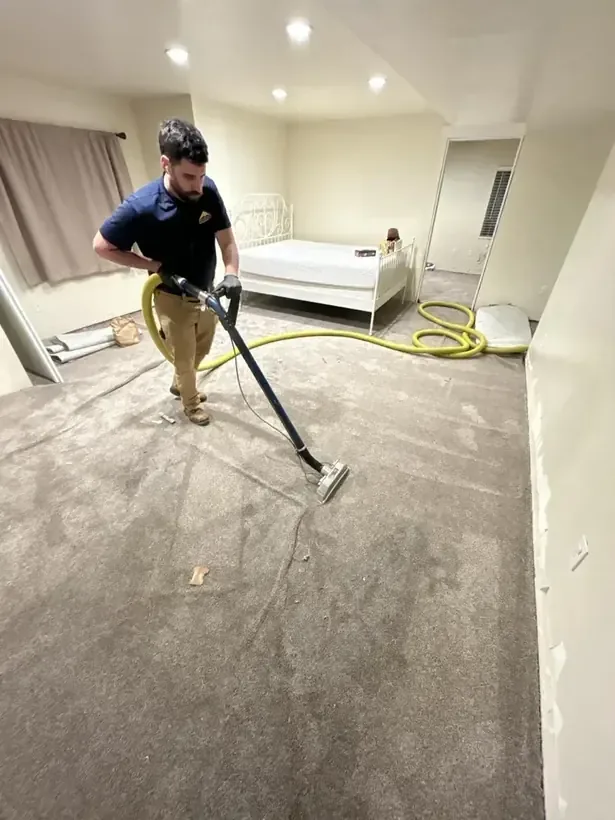
01Pumps and wands lift standing water from carpet, pad and hard floors, in a detached house or a unit where water crossed a shared wall.
Read how each job runs ›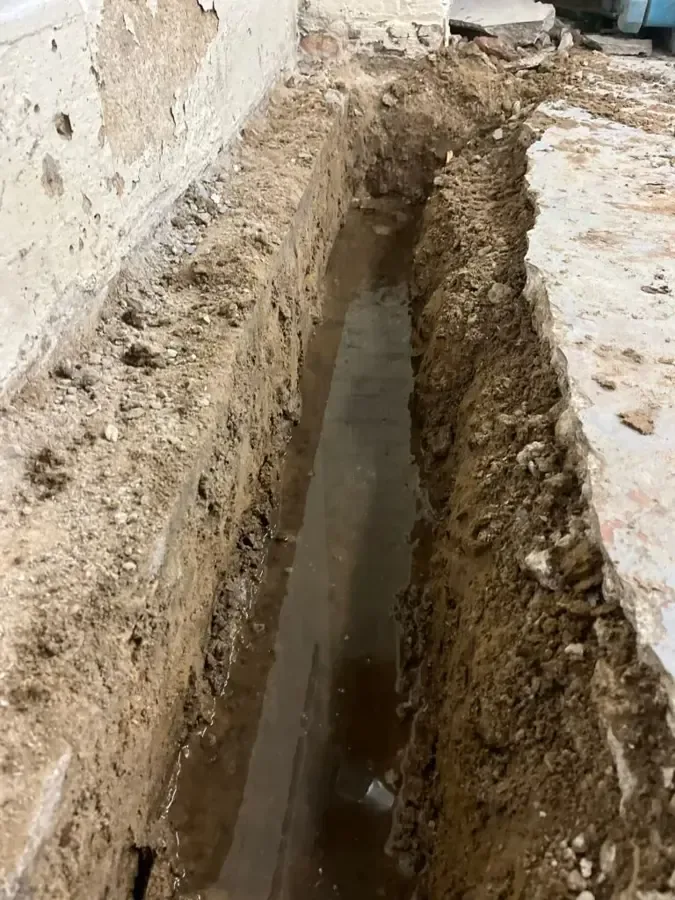 02
02A pipe leaking under concrete is traced first, then the flooring, baseboards and slab are opened and dried.
Read how each job runs ›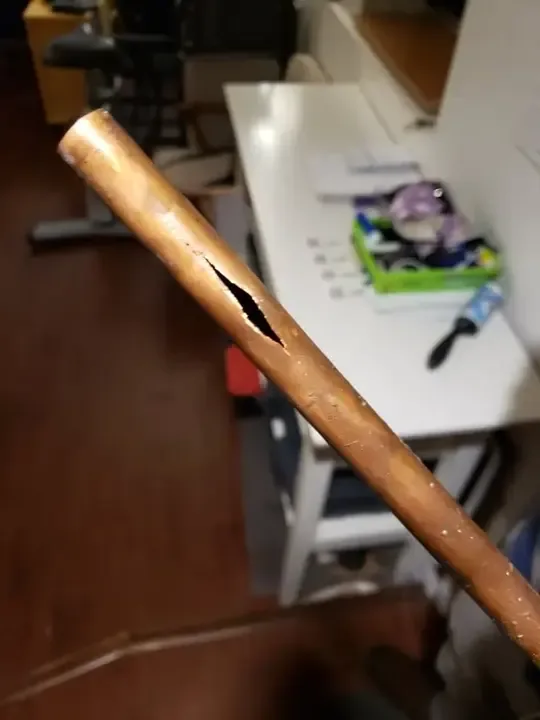 03
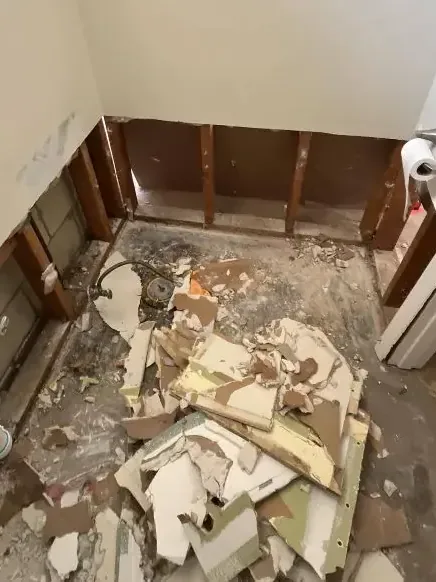
03Splits and pinholes inside walls are cut open low, wet insulation comes out and the cavity dries before the wall is closed.
Read how each job runs ›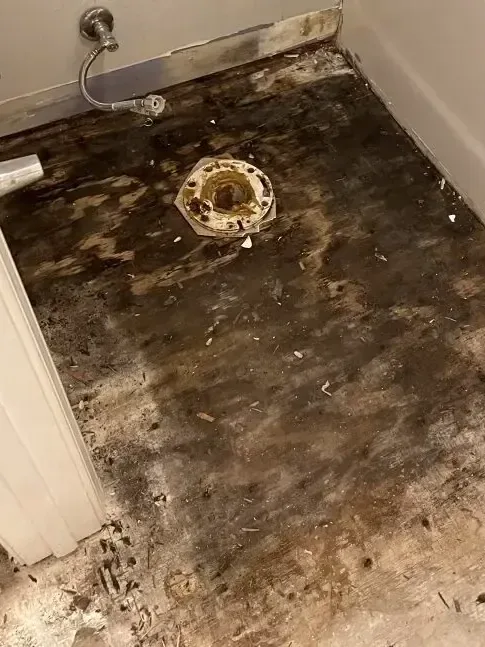 04
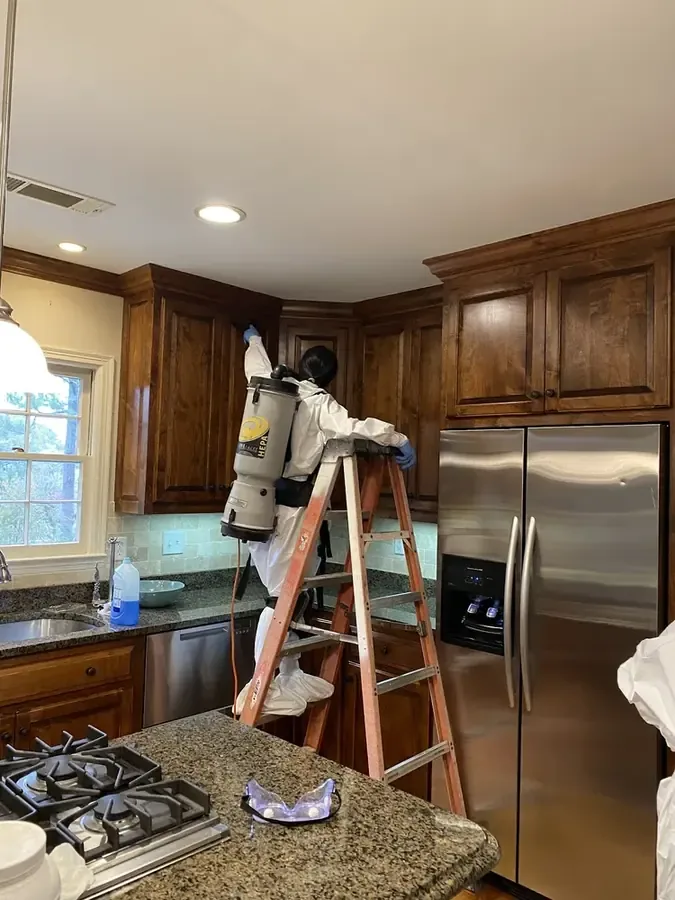
04Backed-up drains call for containment, protective gear and removal of anything the water touched, then disinfecting and drying.
Read how each job runs ›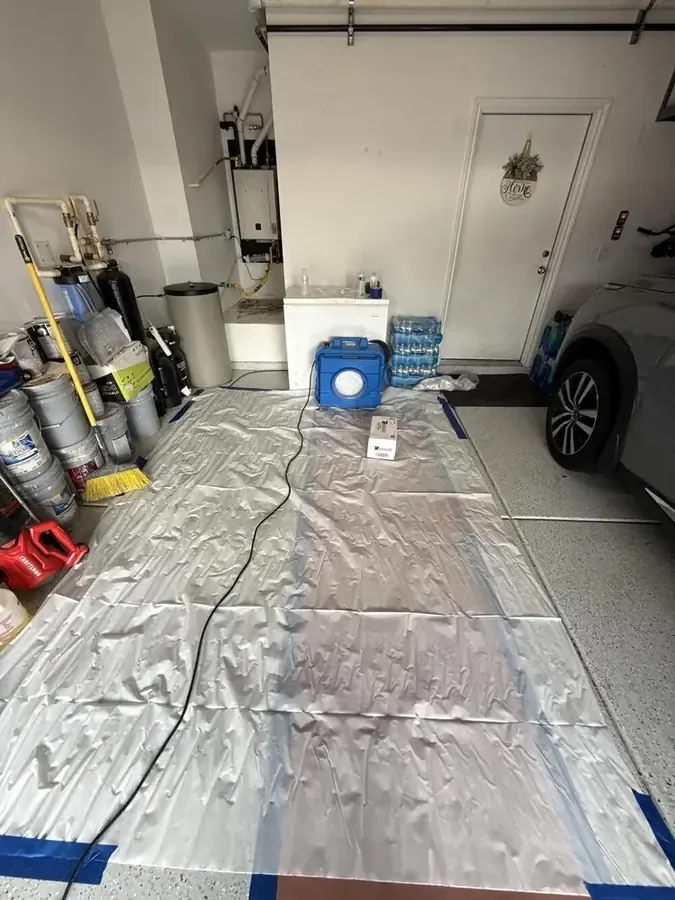 05
05Creek runoff and heavy storms push water and silt into garages and ground floors, which are pumped, cleared and dried.
Read how each job runs ›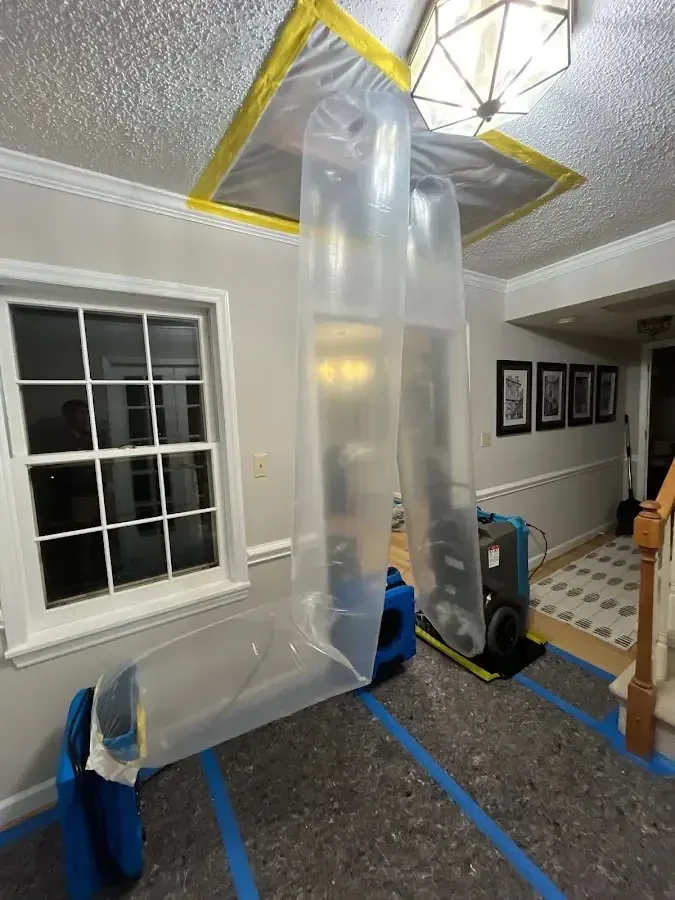 06
06Rain that gets past the roof soaks attic insulation and ceilings, so each wet layer is found and dried from above.
Read how each job runs ›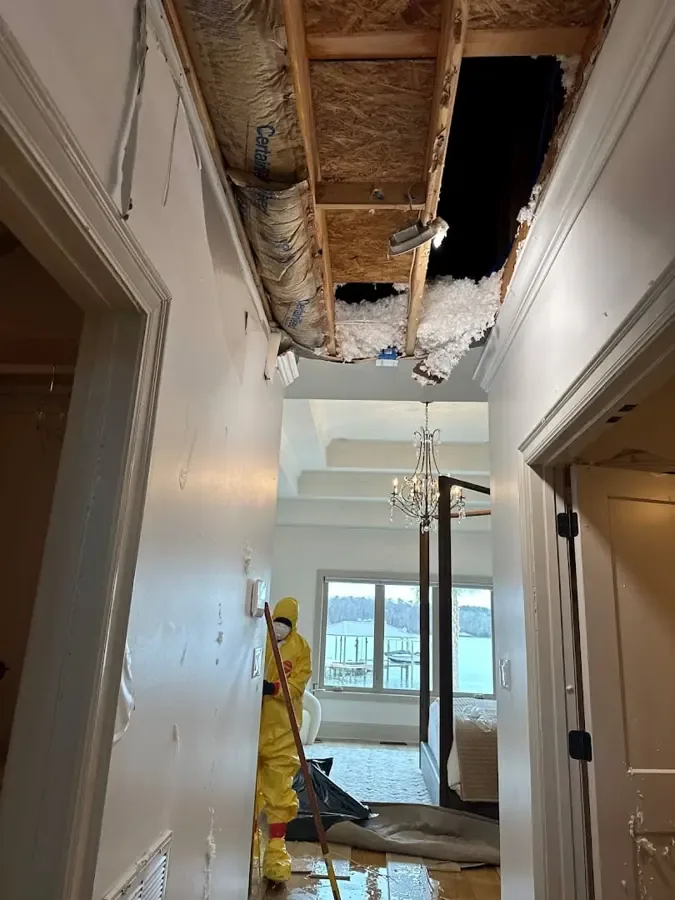 07
07A stain overhead often means a wet joist bay behind it, or a unit above, so the area is mapped before anything is cut.
Read how each job runs ›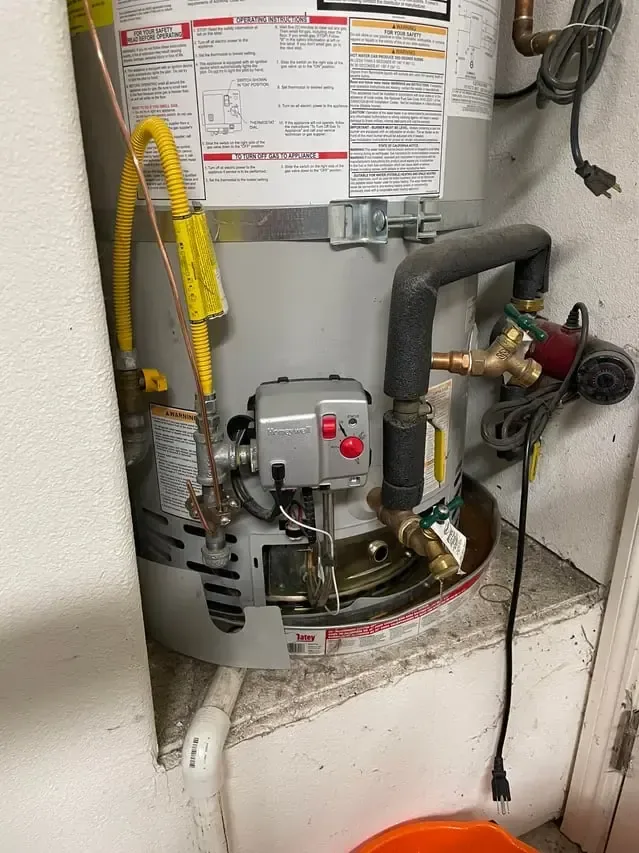 08
08A tank that fails in a garage or closet floods fast, so the slab is extracted and shared walls are checked low.
Read how each job runs ›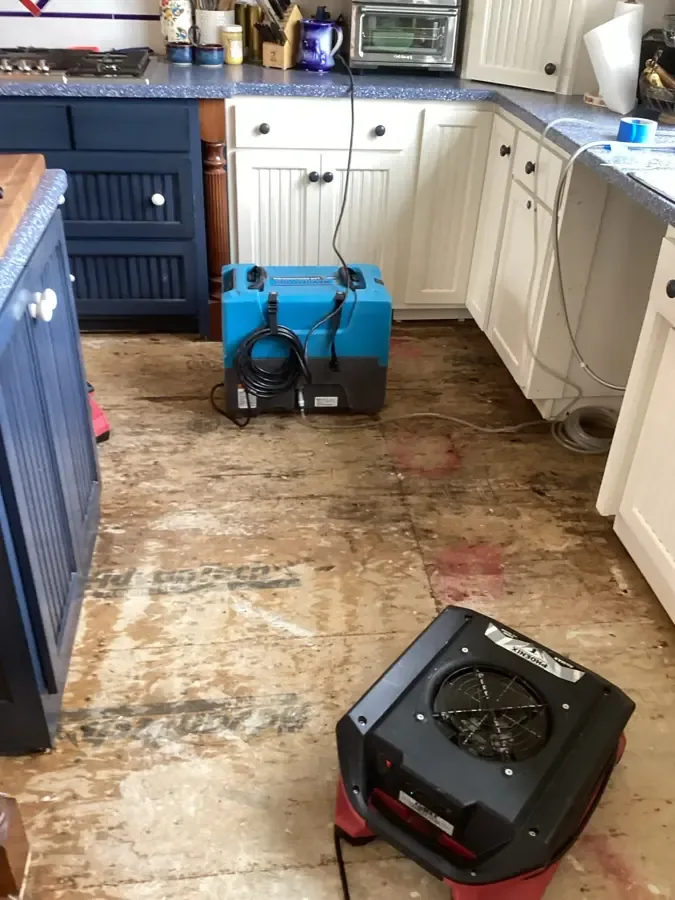 09
09Dishwashers, washers and AC overflow pans leak slowly behind cabinets, where toe kicks come off for readings.
Read how each job runs ›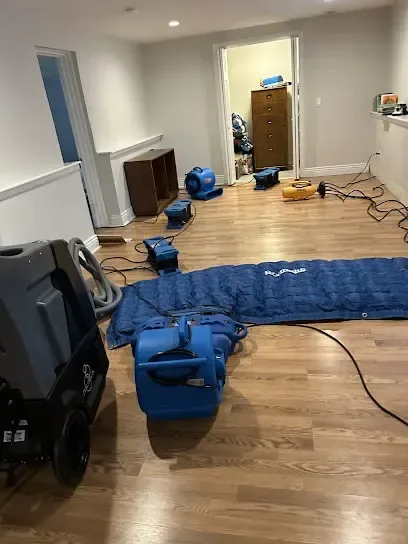 10
10Boards cup and buckle quickly, so drying mats and dehumidifiers go on early to save the floor before panels lift.
Read how each job runs ›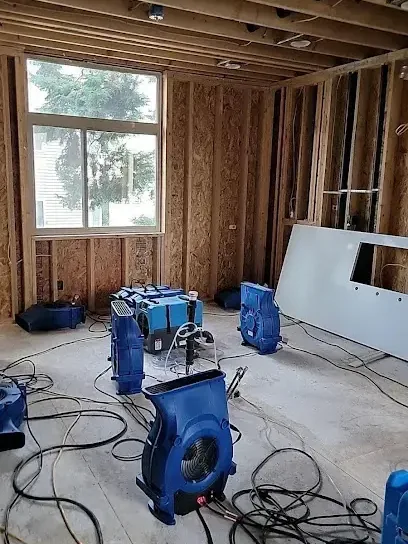 11
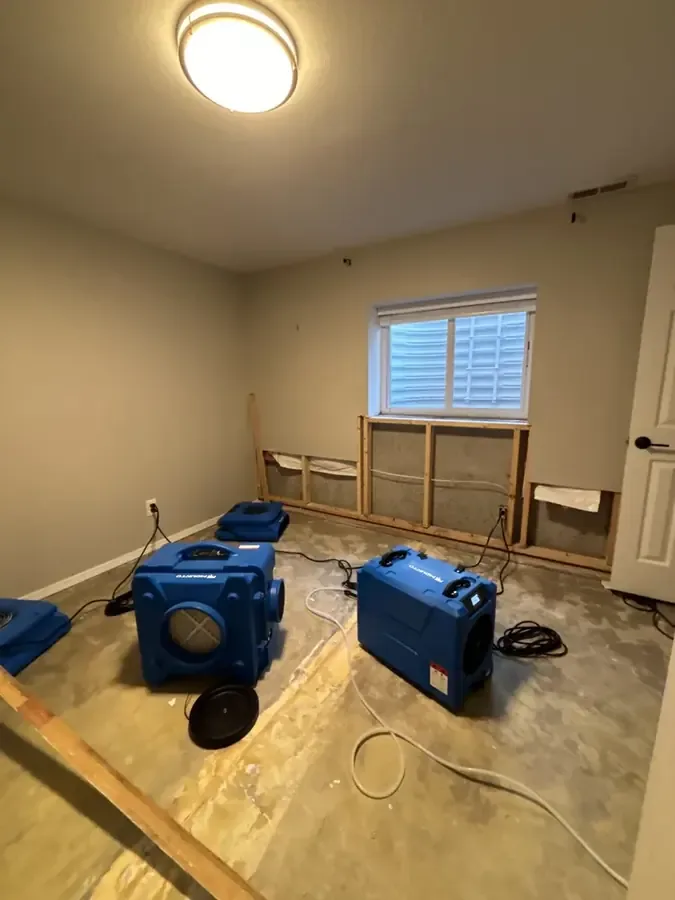
11Moisture maps, air movers and dehumidifiers dry framing and drywall to target readings, logged until each wall is dry.
Read how each job runs ›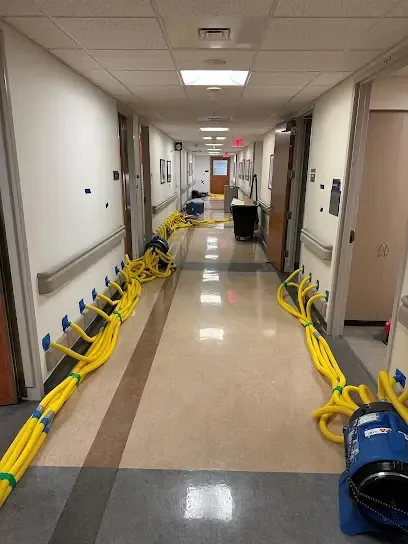 12
12Shops, offices and apartment buildings get phased drying, containment from neighbors and reports an owner or insurer can use.
Read how each job runs ›Small steps taken early keep a wet floor from becoming a wet wall.
Shut the main valve or the appliance supply, and switch off power to wet outlets only if reaching the panel is dry and safe.
Lift furniture legs onto foil or blocks, pull small rugs, and move electronics and paper out of the room.
Take wide and close photos of the damage, the source and the wet belongings before anything is moved or thrown out.
A short call lets a crew advise what can be safely wiped, what must stay put, and how the loss should be reported.
The first call gets the loss described, the water source stopped if needed, and a plan started for extraction and drying work.
Probes and an infrared camera map where water traveled, and each reading is logged so drying can be proven.
Dated photos, moisture logs and an itemized scope give an adjuster what the file needs to move forward.
Crews know how creek flooding, older plumbing and shared walls can change a job in this part of the valley.
Work stays on water and sewage losses: extraction, drying, cleanup and the documentation around them. Rebuilding and repairs are handled by other trades.
Moisture found behind a wall during drying is photographed and logged, so the record shows every wet area from the first reading to the last.
Every job runs the same loop: measure, remove the water, set equipment, then check and adjust. The loop repeats each visit, and the job closes only when materials reach their dry targets.
Meters and a camera find wet materials, mark the edges of the damage and set a drying goal for each one.
Pumps, wands and truck-mounted gear take out what can be physically lifted, since extraction beats evaporation every time.
Air movers push dry air across surfaces while low-grain dehumidifiers pull moisture from the room and keep humidity falling.
Each visit adds new readings, equipment is moved to wet spots and removal stops only when the walls and floor reach target.
Supply pipes, slab leaks and a broken water heater tank release water that starts clean. It stays workable for a short while, so fast extraction and drying often save flooring and drywall.
Read about slab leaks ›Washers, dishwashers and AC condensate carry soap, food or dust. The water is not sewage, but it turns worse as it sits, so porous materials come out sooner.
How appliance leaks are dried ›Sewage and creek flood water carry bacteria, so contact is avoided, porous materials are removed and the area is disinfected before drying begins.
Sewage backup cleanup ›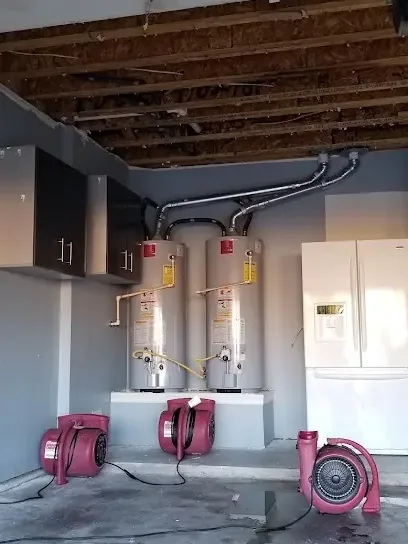
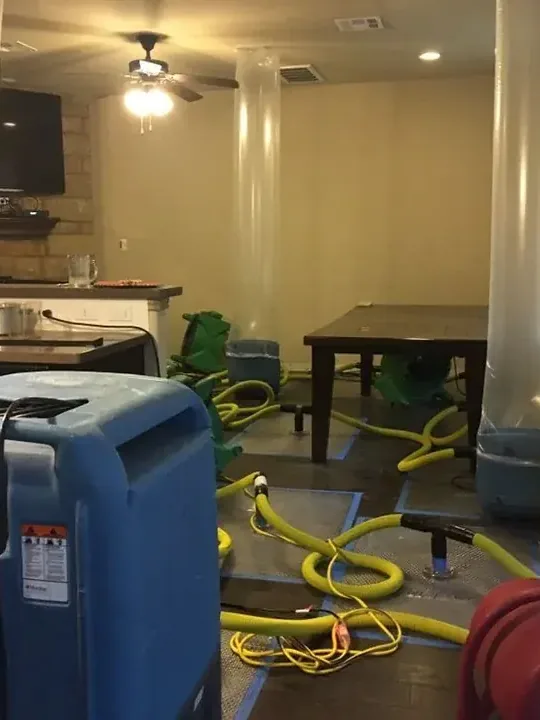
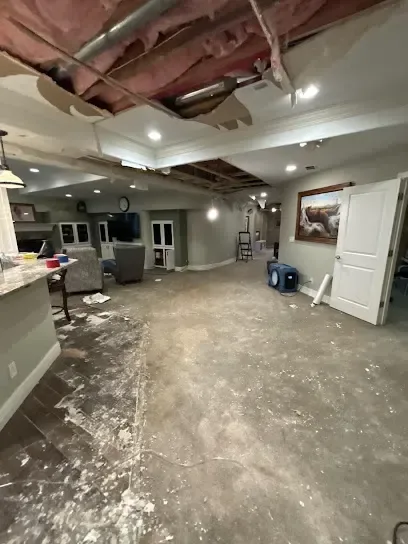
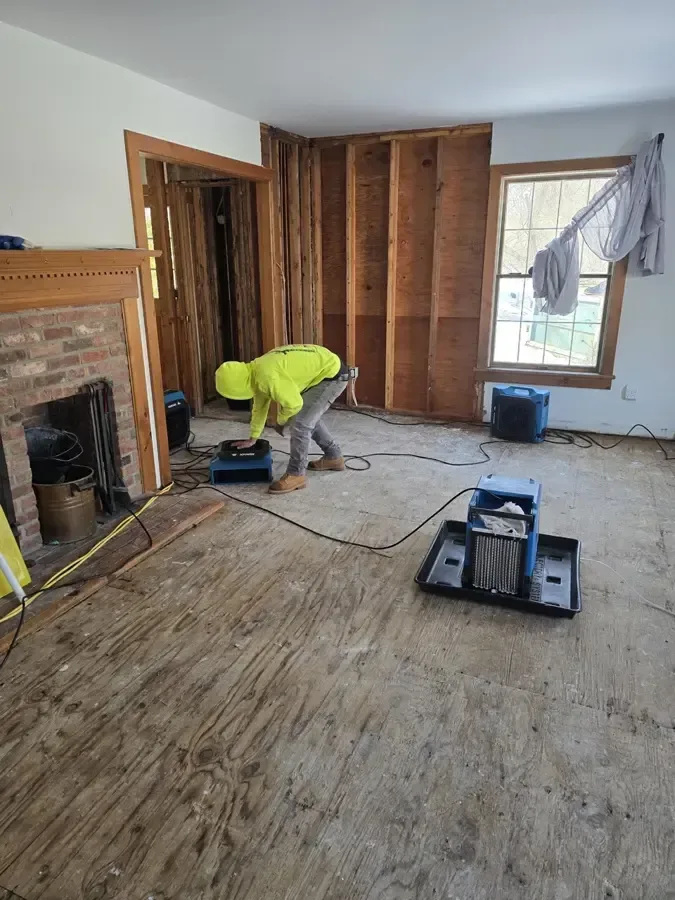
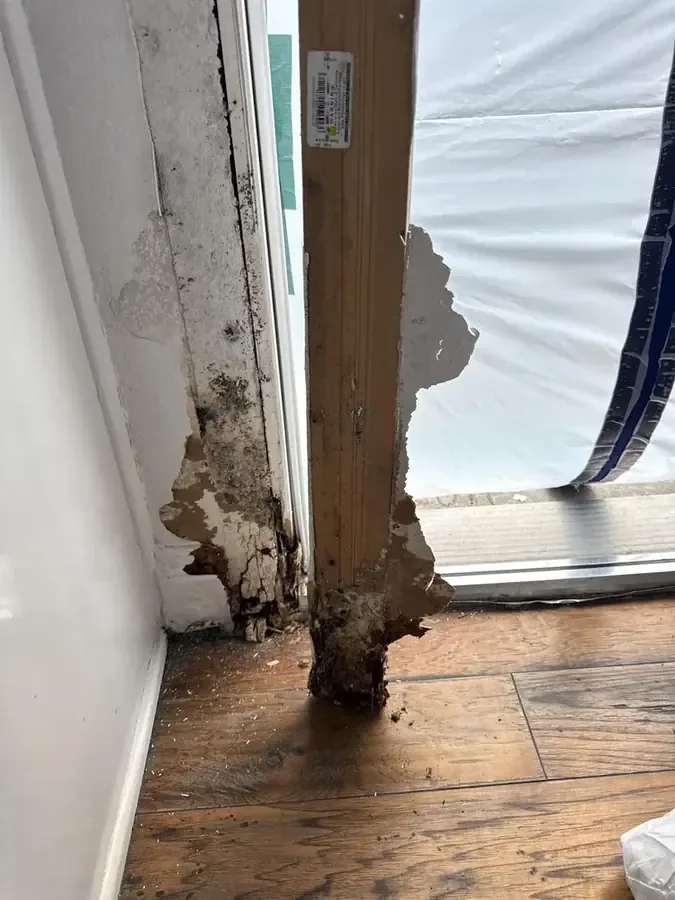
Work covers the older blocks around Main Street, the newer homes on the east edge, and the neighborhoods listed below near the creek and canyon.
Addresses just outside the list are often covered too, so describe the street and the loss on the call.
Santa Paula, CA · [email protected]
☎ Ask about your streetWork covers ZIP 93060 and the streets near Main Street and Harvest at Limoneira. All areas covered ›
Small clean-water losses often fall between $1,300 and $6,000, while larger or dirtier jobs climb past $25,000. The final number follows the wet area, how long water sat and what kind of water it was.
Ranges reflect typical jobs, and the real scope is set only after moisture readings. Homeowners with a covered loss can share the logs and photos with their adjuster.
Many homeowner policies treat sudden leaks differently from slow ones, so the cause and the date matter. Clear records make that conversation easier.
Policies differ on what a covered water loss includes, so reading the declarations page and the water damage section helps before the adjuster visits. Many owners also ask what the deductible is before work starts.
Crews can send the adjuster the photos and logs on request.
Water trouble in this valley comes from several directions: a creek with a recorded flood history, older houses, shared walls and everyday plumbing. None of it means damage is coming, but it explains the pattern local crews see.
The creek peaked at 27,500 cubic feet per second in January 2005, close to the 28,000 its channel was built for. Updated 2011 records raised the expected peak of a one percent flood by about 40 percent.
FEMA revised the creek's flood maps effective May 15, 2025, removing the A99 zone and adding Zone AE in some city areas. Whether a given address changed is a question for the map, not a guess.
The county says significant areas at the lower end of the city remain flood-prone, so garages and ground floors deserve a look after heavy rain.
About 60 percent of local housing units were built before 1970, and downtown Main Street has bungalows, cottages and Victorian-style houses. Aging plumbing is a general concern in homes that old.
Buildings of five or more units hold 14.8 percent of the housing and buildings of two to four units hold 10.0 percent, so a leak upstairs can soak the unit below.
January 2023: Big storms dumped mud, rock and debris into the creek channel, causing flooding and damage at the south end of the flood system and harming ten of the 24 spur dikes.
Carpet pad, drywall and wood start absorbing at once, and swelling, staining and bacterial growth follow as the water sits. Starting extraction early keeps more of the flooring and walls in place, which also keeps the claim smaller.
Often it covers a sudden event such as a burst pipe or a failed water heater, while slow seepage and rising creek water usually fall outside a standard policy. The policy language decides, so the adjuster should confirm.
Photograph the damage, tell the property manager in writing and keep records of every wet surface. Drying uses containment so neighbors are not disturbed, and fault between units is for the building owners and insurers to settle.
Materials matter more than age. Plaster, old hardwood and layered flooring can hold water longer than modern drywall, so readings decide how long drying runs, not the year a house was built.
A wet garage can come from runoff, a roof or a water heater, so the source is traced first. FEMA revised the creek's flood maps in 2025, and an address can be looked up on the agency's map instead of guessed at.
Yes. Sewage carries bacteria, so crews wear protective gear, contain the area, remove porous materials and disinfect before drying. A plumber finds the cause of the blockage, while the cleanup follows the same steps either way.
Readings from the same spots are compared with a dry reference material, and drying stops only when walls, subfloor and framing match it. The log from each visit becomes the proof that the job is finished.
Clean-water carpet and pad can sometimes be dried in place, while sewage-soaked or long-wet porous items usually go. Photograph everything first, since an adjuster may want to see what was removed.
Often part of a shop can stay open if wet areas are sealed off with containment, noisy equipment runs after hours and the schedule works around deliveries. The scope depends on how far the water spread.
The crew finds the water, stops the source if it is still running, takes photos, maps moisture and explains the scope and price range before any demolition begins.
Describe the leak, send photos if possible, and a crew will explain what happens next.
☎ (888) 578-6508Talk to the valley drying crew