Commercial Water Damage Cleanup in Santa Paula
A leak in a shop, office or apartment building has to be handled with tenants, neighbors and deliveries in mind. Crews extract, contain and dry in phases so the business can stay as open as possible.
☎ (888) 578-6508Protect a shop from water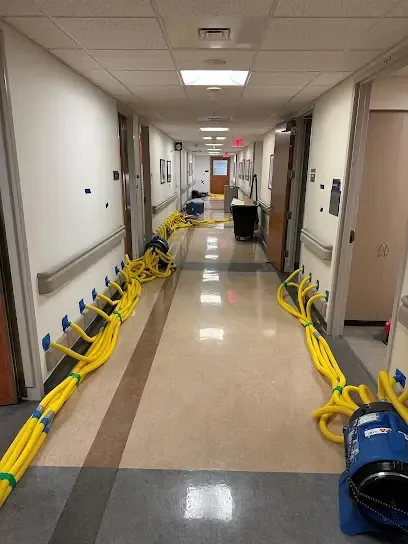
First steps for commercial water damage, right now
- 1
Assess the loss
Walk the space, find the source and map every wet suite or room.
- 2
Contain the work
Seal wet zones so neighbors and customers are not affected.
- 3
Extract and dry
Pump water out, then set equipment on a phased plan.
- 4
Report daily
Readings and progress are sent to the owner and insurer.
Main Street has clothing shops, specialty stores, restaurants, service businesses, offices and small neighborhood markets, and the city has few large retail stores. That mix puts many businesses in buildings that share walls with neighbors, so containment matters as much as drying.
What does commercial water damage cost in Santa Paula, CA?
One suite or shop often costs $3,000 to $12,000. Several suites or a floor run $12,000 to $40,000, and a building-wide loss starts at $40,000 and climbs from there.
One suite or shop
- Extraction and drying
- Containment from neighbors
- Daily reports
Several suites or a floor
- Phased drying
- After-hours work
- Ceilings and walls opened
Building-wide loss
- Large-loss equipment
- Several wet zones
- Owner and insurer reports
Ranges are typical, not a quote: the water category, square footage, material class and how fast drying started move the number most. The water damage cost calculator gives a closer range.
Keeping a business running
- Wet areas are sealed with plastic so customers and staff can use the rest of the space.
- Noisy equipment and extraction can be scheduled for evenings or weekends.
- Stock, files and fixtures are photographed and moved before drying starts.
- Daily reports list readings, equipment and next steps for the owner.
Landlords, tenants and insurers often need separate reports, and the same readings can serve all of them.
A wet shop, office or apartment building loses money every day. A short call starts the containment and drying plan.
☎ Share the suite detailsAgriculture, oil and local trades
The local economy is agriculture based, with lemons and oranges first, avocado now a major crop, and oil still extracted from the South Mountain Oil Field. Whatever the trade, the plan starts with what is wet, what is stored there and what must keep running. A structural drying plan sets the schedule.
Older downtown buildings
Downtown, the original Union Oil Company headquarters now houses the California Oil Museum, a sign that older buildings still serve the area. Older construction can hide wet cavities, so readings behind walls and above ceilings come before any promise about what can stay. A burst pipe in an upper suite is a common source.
How commercial water damage is handled, step by step
Assess
Walk the site and map the wet areas.
Contain
Seal wet zones from the rest.
Dry in phases
Equipment moves as areas dry.
Report
Readings go to owner and insurer.
What every commercial water damage job is held to
Rapid local response
Dispatch runs around the clock, and active water is treated as urgent at any hour, weekends included.
IICRC S500 drying standard
Equipment is sized to the class of loss and stays until the readings say dry.
Claim-ready documentation
Moisture maps, daily logs and photos taken before anything is torn out.
Conejo Valley water know-how
Slab homes, garage water heaters, attic AC and winter hillside runoff.
Commercial water damage across Santa Paula and nearby communities
Commercial work covers Main Street shops, restaurants and offices, apartment buildings, and businesses along Highway 126 and Telegraph Road, all in ZIP 93060 and the nearby streets.
The same service nearby: commercial water damage in Newbury Park, Fillmore, Camarillo.
Water damage restoration in Santa Paula · every town covered
Related water damage services in Santa Paula
Commercial Water Damage questions
Can a shop stay open during water damage drying?
Often part of it can. Wet areas are sealed off, noisy equipment is scheduled for off hours when possible and the work is phased so customers can use dry areas.
Who reports to the insurer, the tenant or the landlord?
Both may have separate policies. The crew provides readings, photos and an itemized scope that either party can share, and the building owner usually coordinates with the commercial insurer.
What happens to inventory and files?
Contents are photographed, moved out of the wet zone and sorted into what can be dried, what can be cleaned and what is lost. Lists and photos support the claim for business property.
How are apartment buildings handled differently?
Water often moves between floors and units, so each affected unit gets its own readings and photos. Containment protects neighbors, and the manager receives one clear report for the whole building.
Does drying take longer?
Larger spaces and thicker materials can need more equipment and days, so daily readings show the owner progress.
Get the building dry and open
Describe the space, the source and who is affected, and the crew will lay out containment, scheduling and reporting before equipment goes in.
☎ (888) 578-6508Set up the phased plan