Clean water
Category 1Water from a supply pipe or roof leak starts clean, but it picks up contaminants if wet materials sit for several days.
Burst pipe water damage ›Fillmore homes see water from Sespe Creek storms, failing supply pipes, tired water heaters and stopped drains. Crews pull the water out, then dry floors, walls and framing until readings match a dry reference.
☎ (888) 578-6508Start drying out a valley homeEach service page below covers one kind of loss, from a burst pipe in a wall to creek water in a garage, and explains how the crew handles it.
 01
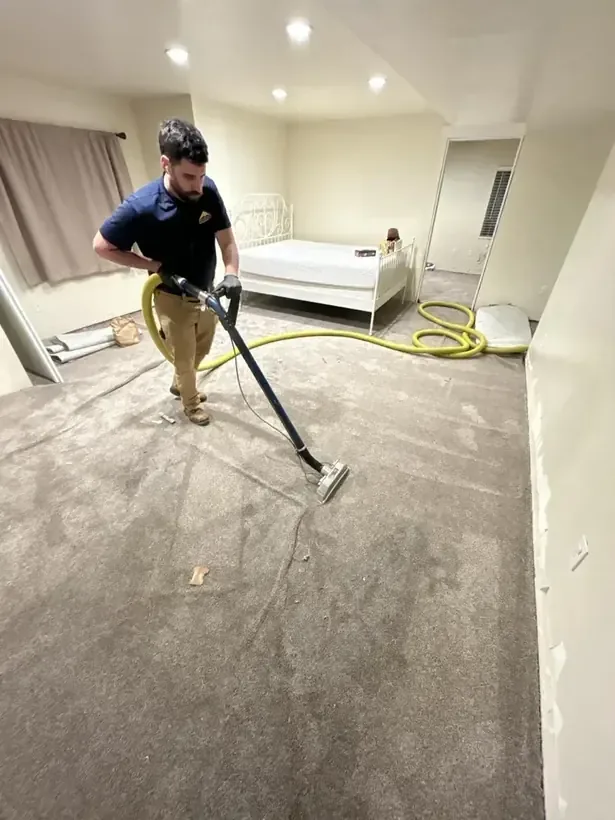
01Standing water comes out first, using wands and pumps, before it wicks into baseboards, carpet pad and the bottoms of walls.
See the drying steps ›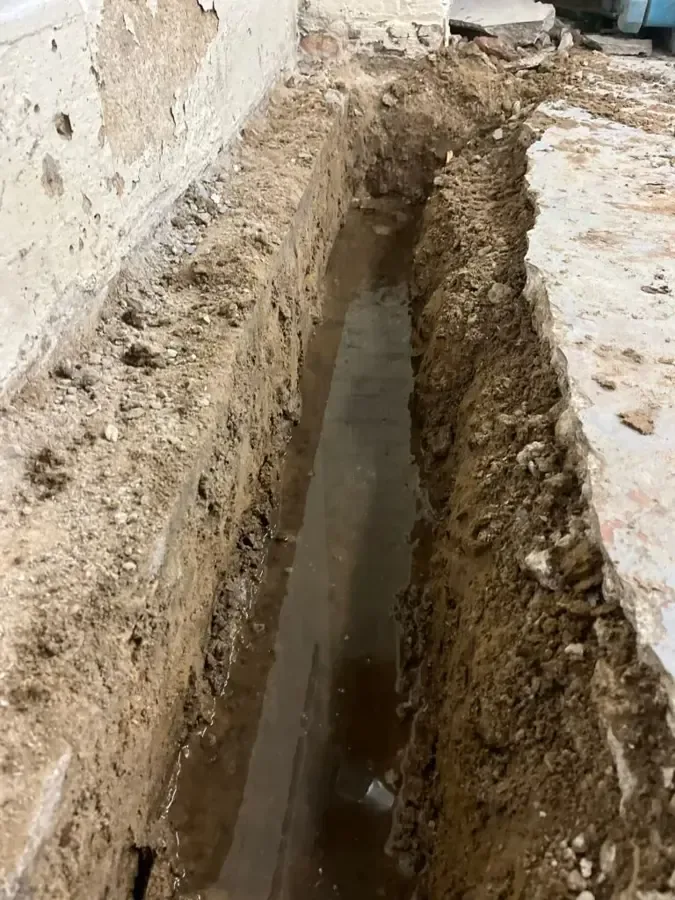 02
02A leak under the floor is located, the wet flooring lifted and the concrete dried until readings come back normal.
See the drying steps ›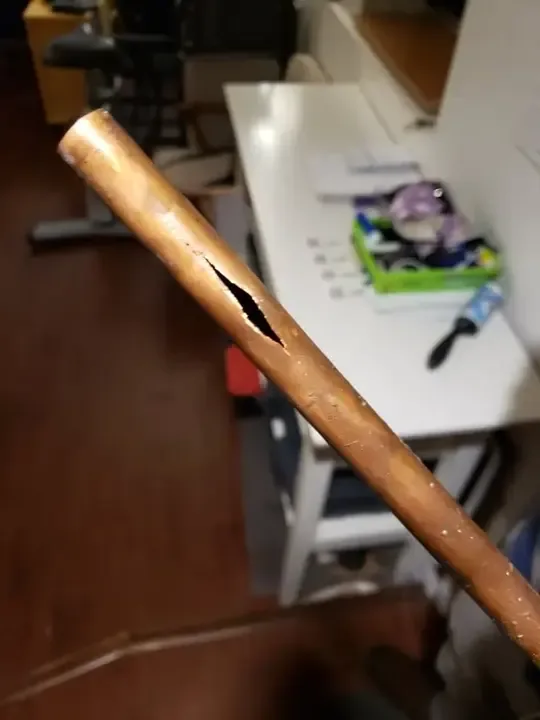 03
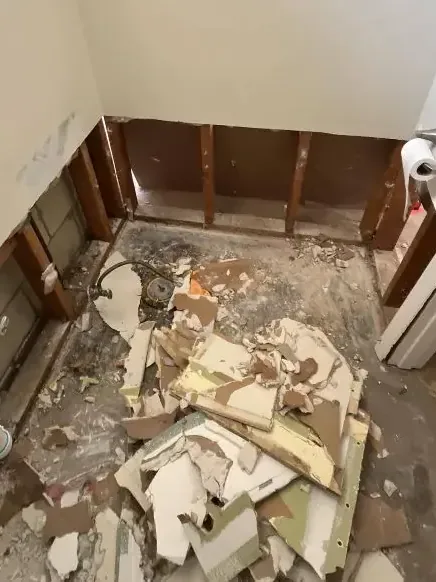
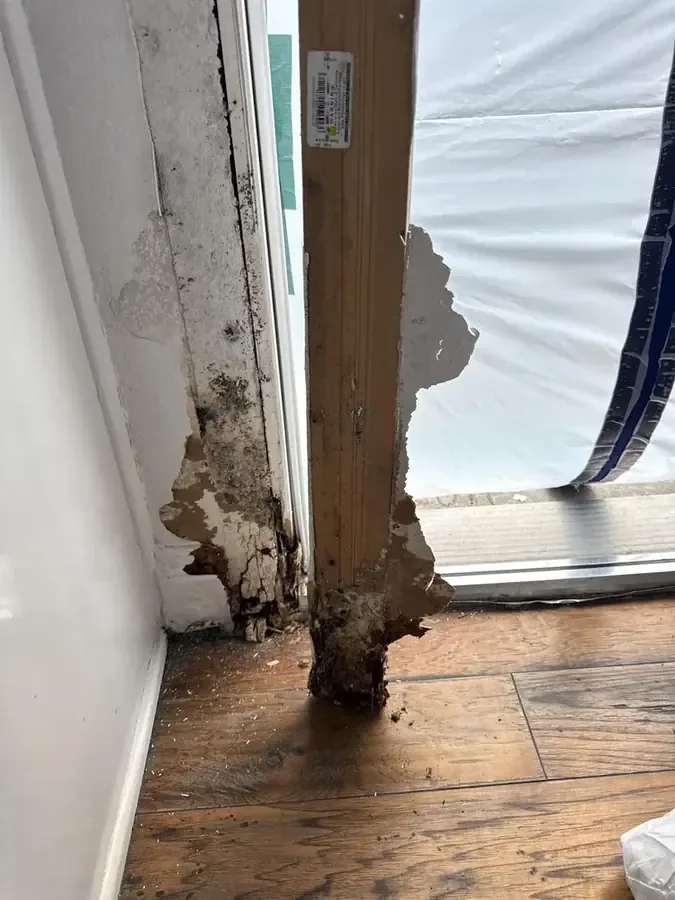
03A split or pinhole supply pipe is traced, the wall or ceiling opened where it is wet and the cavity dried before closing.
See the drying steps ›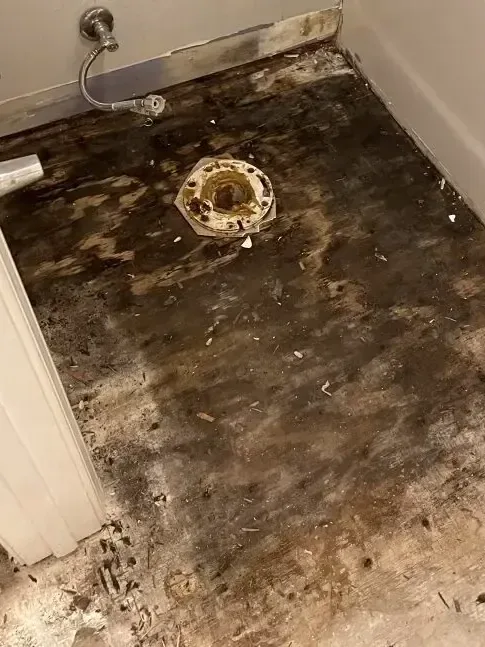 04
04Sewage inside a home is treated as contaminated water: porous materials come out, hard surfaces are treated and the room is dried.
See the drying steps ›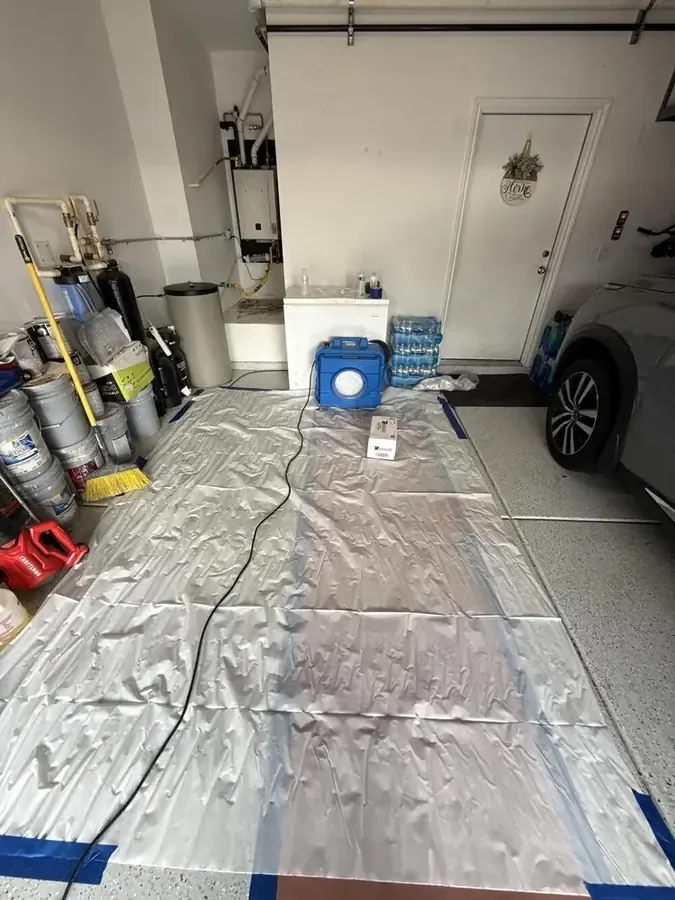 05
05Creek water, mud and runoff pushed toward a home are pumped out and cleared, then the floors and wall bottoms are dried.
See the drying steps ›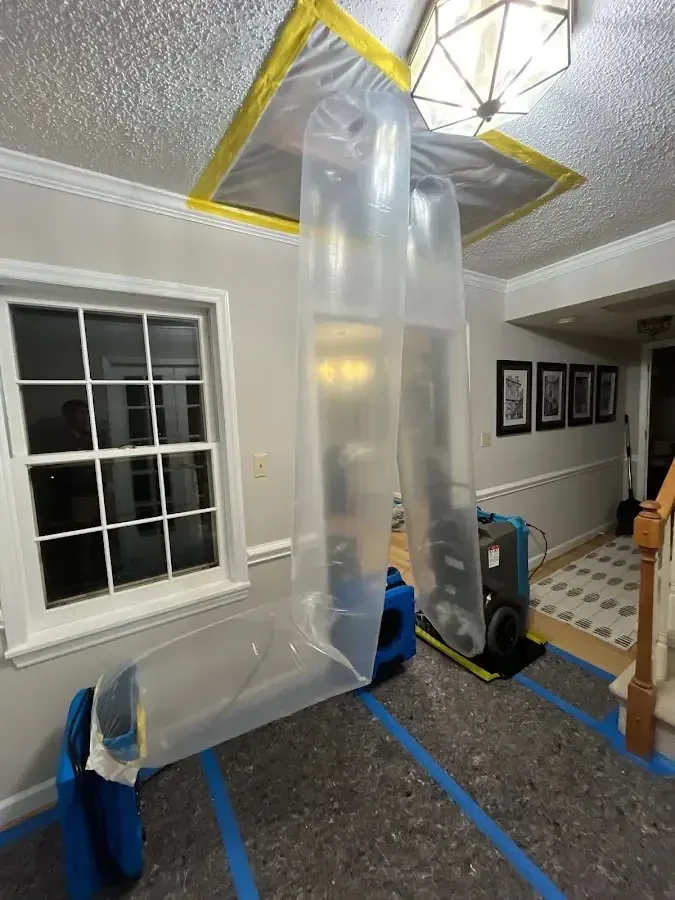 06
06Winter storms show up as wet attic insulation and stained ceilings, so the attic and ceiling are both read and dried.
See the drying steps ›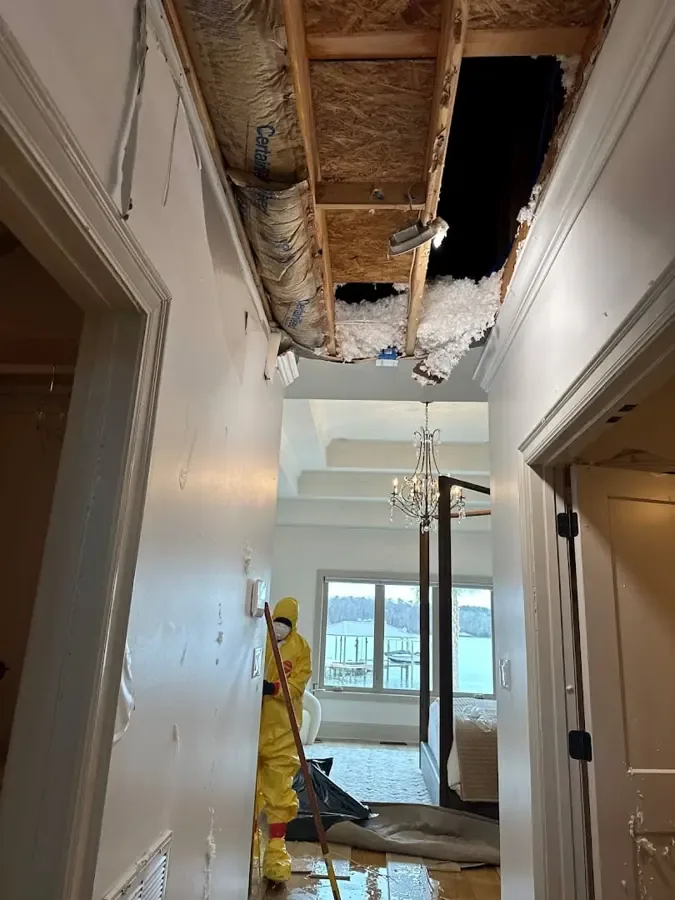 07
07A stained ceiling is traced back to a roof, supply pipe or upstairs bath, then opened and dried one joist bay at a time.
See the drying steps ›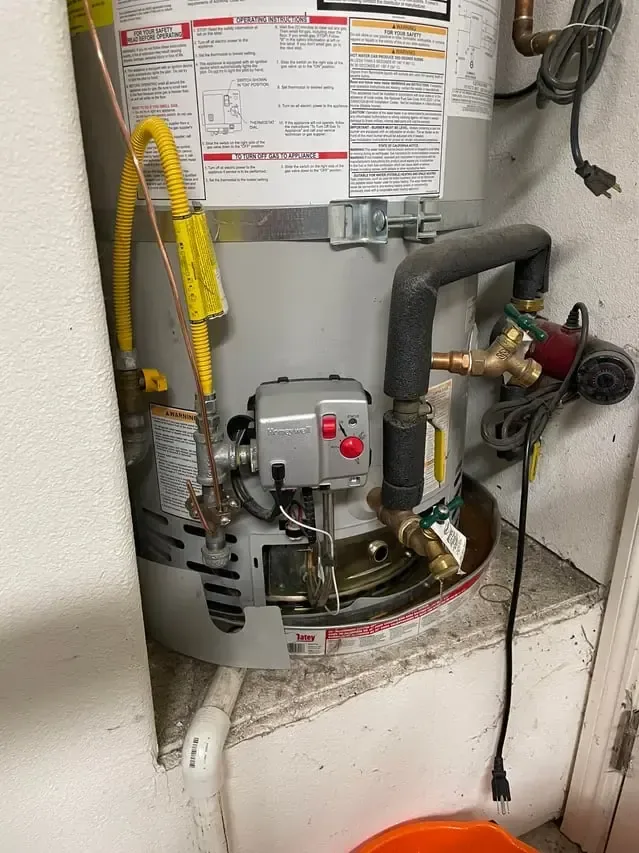 08
08A failed tank is shut off, the spill extracted before it spreads under walls, and wet drywall and flooring dried.
See the drying steps ›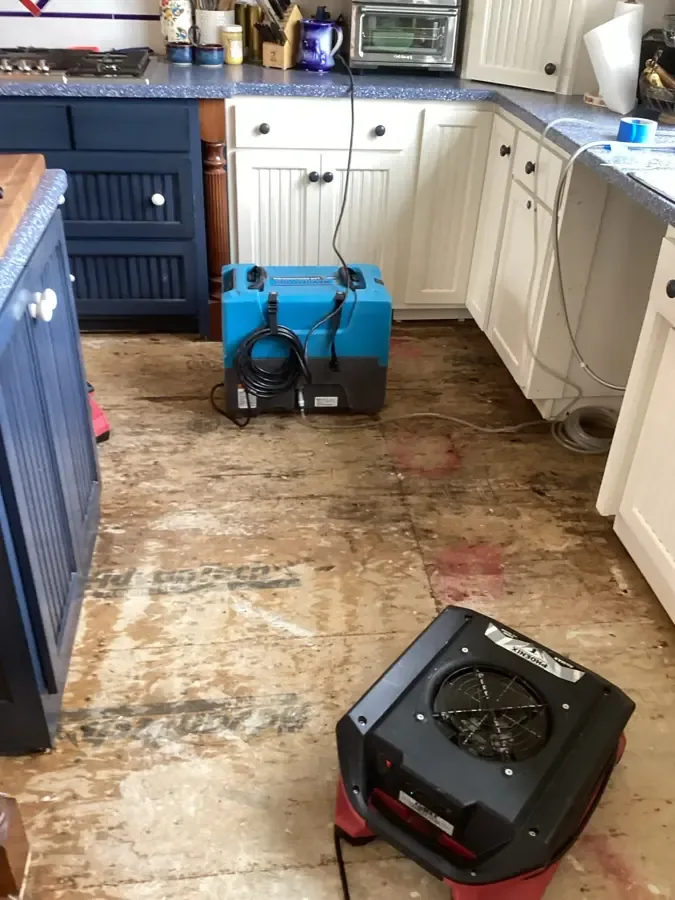 09
09Washer, dishwasher and air conditioner condensate leaks are dried, with hot summers keeping the AC busy.
See the drying steps ›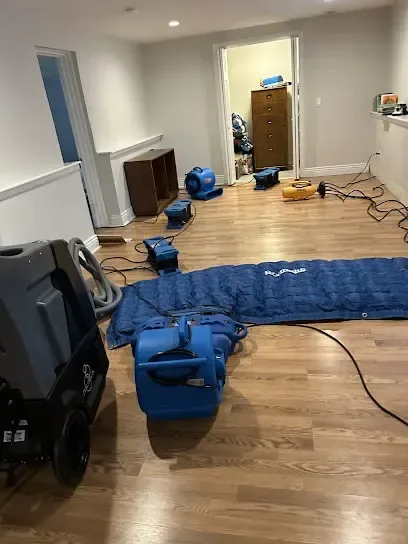 10
10Wet hardwood and laminate are dried with mats and readings, then judged board by board before anything is removed.
See the drying steps ›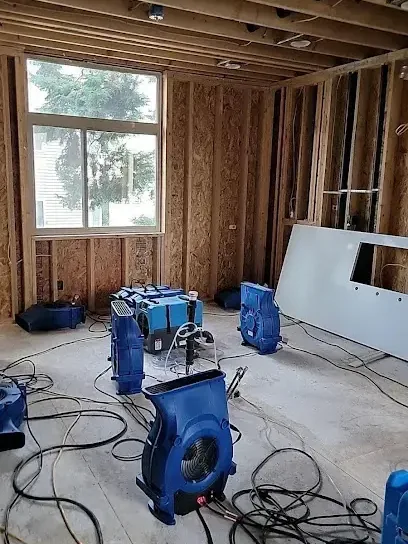 11
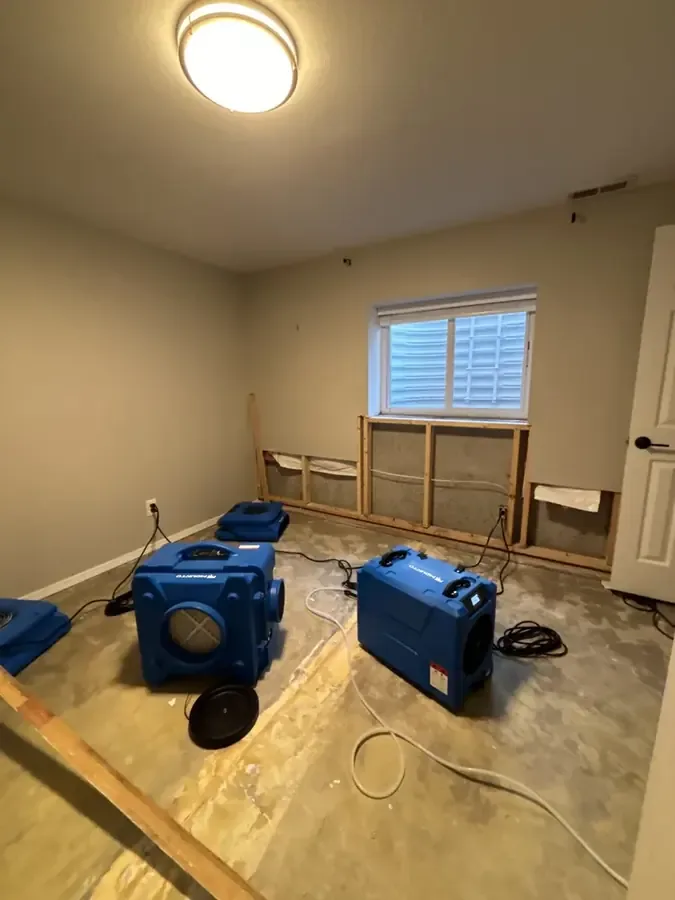
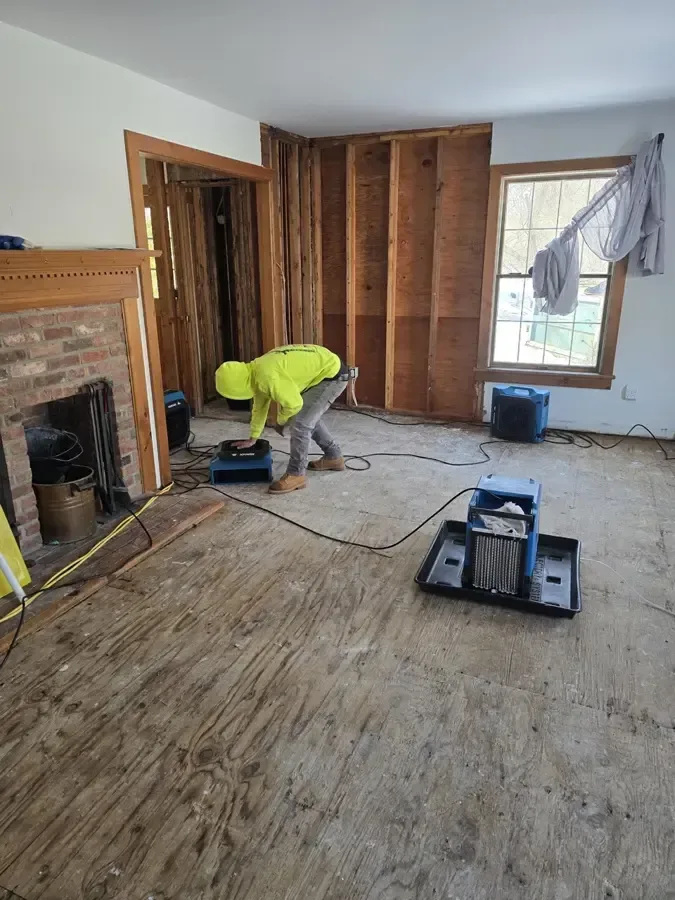
11Framing, subfloor and drywall are dried with dehumidifiers and air movers until readings match a dry reference.
See the drying steps ›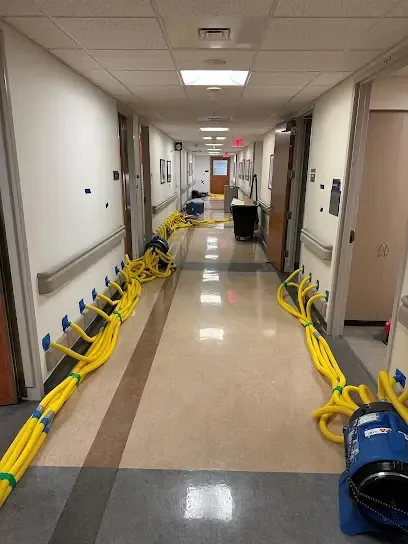 12
12Shops, offices and farm buildings get phased drying, with walls opened and equipment placed to limit downtime.
See the drying steps ›Four quick actions limit the damage before the drying crew gets started.
Shut the main valve or the fixture valve, switch off power to wet outlets if it is safe, and keep everyone out of standing water.
Lift small furniture, rugs, electronics and paper off wet floors, and photograph the damage before anything is moved or thrown out.
Take wide and close photos with dates, keep damaged items for the adjuster to see, and write down when the leak began.
Standing water and wet drywall start to swell and sour fast, so the sooner extraction begins, the less has to be torn out.
Crews work day and night, because water that sits overnight soaks into drywall and subfloor that could have been saved.
A moisture meter and an infrared camera map where water traveled, so drying ends at dry readings, not after a guessed number of days.
Photos, moisture logs and an itemized scope are kept for the adjuster, so a covered loss is easier to document.
Creek flooding, hot dry summers and busy storm seasons shape what local homes face, and the crew plans for each of them.
The work is limited to water and sewage losses in homes, rentals and small businesses, from a single wet room to a flooded floor.
Rebuilding, new flooring and paint are separate trades; the drying crew hands over a dry, documented structure so those trades can start.
Every job follows one order: first measure the damage, then remove the water, set equipment suited to the materials involved, and keep checking until wood, drywall and concrete all read dry.
Meters and a camera map the wet areas, and photos record the rooms before anything is touched.
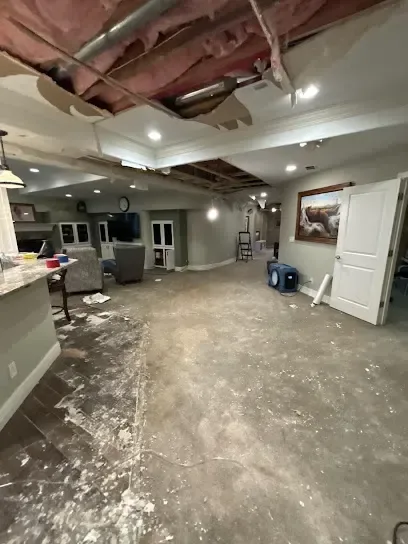
Pumps and extraction wands take out standing water, and soaked carpet pad or insulation is cut out and bagged.
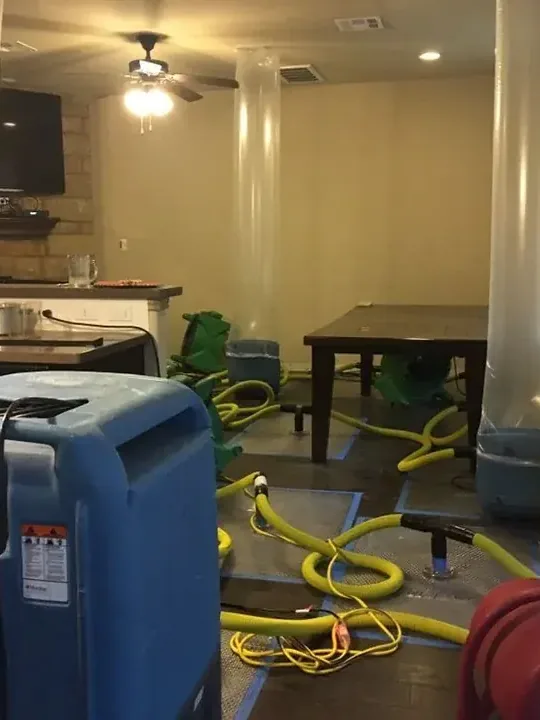
Air movers push dry air across wet surfaces while dehumidifiers pull the moisture out of the room, sized to the volume of the space.
Daily readings track the drop, equipment is adjusted, and it only comes out when every material reaches its dry target.
Water from a supply pipe or roof leak starts clean, but it picks up contaminants if wet materials sit for several days.
Burst pipe water damage ›Washer, dishwasher and condensate leaks carry light contamination, so wet carpet, pad and cabinet bases are removed or treated, not just dried.
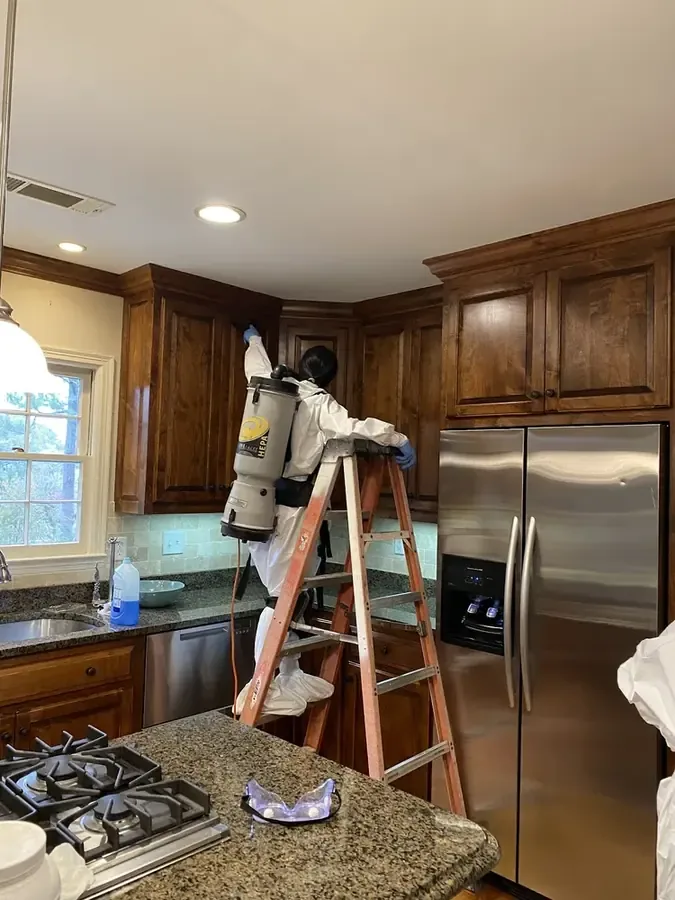
Appliance and AC leaks ›Sewage and floodwater carry bacteria, so the area is sealed off, porous materials are discarded and every surface is treated before drying starts.
Sewage backup cleanup ›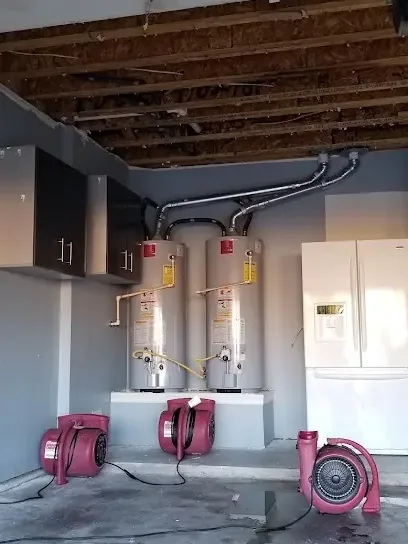
Work covers the city and the nearby valley, from downtown blocks and the Los Serenos tract to Heritage Grove, Bardsdale and Piru.
Call with the street and the problem, and the crew will confirm coverage and what the first visit involves.
Fillmore, CA · [email protected]
☎ Ask about an addressZIP 93015 is covered, along with the valley streets around town. See all service areas ›
Most losses fall between $1,300 and $25,000 or more, depending on how much got wet, how long it sat and whether the water was clean, gray or black. Photos and readings settle the final scope.
Ranges are typical, not quotes: the written scope after the first walkthrough sets the real number, and whether a policy pays depends on the cause.
Water damage claims move faster with good records, and the crew documents each room so the adjuster sees the same picture the crew does.
Policies treat a sudden pipe failure differently from slow seepage, so the first call to the carrier should say what happened and when, and the crew can supply photos and moisture logs on request.
The crew does not decide coverage; the carrier does.
Fillmore sits beside Sespe Creek in the Santa Clara River Valley, so heavy winter storms can push water and mud toward homes, while hot dry summers keep air conditioners working hard. That mix of creek, rain and heat shapes the water jobs below.
Sespe Creek runs beside town. In 1969 its levee broke and water flowed into Shiells Park and the surrounding orchards, and in 1978 the Sespe flooded and put 5 to 8 feet of water into the Los Serenos tract on the west side.
The county's rain year starts October 1. By January 24, 1995, the city had 20.47 inches since then against a normal 9.22, and in 2005 high water cut off access to town for several days.
The National Weather Service issued a flash flood warning here in January 2023, the Old Telegraph Road bridge stayed closed in February 2024, and Sespe Creek was threatening homes on Grand Avenue in January 2026.
The city maintains its own storm drains and two catch basins, at Fremlin Basin and Tietsort Drive, while residents inside city limits can collect sandbags at the fire station during flooding after calling first.
Summer highs can pass 100 degrees, so air conditioners run for long stretches, and overflowing condensate pans and drain pipes can become a source of leaks in ceilings and walls.
March 12 to 13, 1928: The St. Francis Dam failed at 11:56 p.m., and the flood reached Fillmore at about 2:20 a.m., arriving at A and Ventura streets and sweeping lower Bardsdale.
Drywall and carpet pad begin to swell and sour within a day or two, and hidden wet framing can follow, so extraction and drying should begin as early as possible, even when the surface looks only damp.
The main shutoff gets closed, wet outlets are left alone, and photographs are taken before cleanup begins, then a drying crew opens the wall where the pipe let go and dries the cavity.
Policies usually cover sudden events such as a burst pipe or a failed water heater, but often exclude slow seepage and rising flood water, which needs a separate flood policy. The carrier makes the final call on coverage.
Yes. Water from Sespe Creek or storm runoff carries mud, silt and bacteria, so mud is cleared, porous materials are removed and surfaces are treated first. A supply pipe leak starts out clean, so more materials can usually be dried and kept.
Most jobs run three to five days, though dense materials such as hardwood, plaster and concrete can take longer, and the daily readings decide when each piece of equipment comes out.
Surface feel misleads, because moisture hides in subfloor, wall bottoms and framing, so equipment stays until meter readings match a dry reference and the logs show the numbers holding steady.
Yes. Sewage carries bacteria, so the area should be left alone, children and pets kept out, and a cleanup crew called before anything porous is touched or kept, because contaminated carpet and drywall cannot be cleaned back to safe.
Water is pumped out, mud and debris are cleared by hand, wet drywall and flooring come out, and the garage floor and wall bottoms are treated and dried once the space is clear of silt.
They help slow runoff, but city guidance says not to stack them against an outer wall because wet bags add pressure, and the supply is limited, so water that gets inside still needs extraction and drying.
The drying method is identical, but commercial jobs add containment from neighboring suites, after hours scheduling where needed, and written reports for owners, property managers and insurers.
Call with the address and what happened, and a crew will plan extraction and drying for every wet room.
☎ (888) 578-6508Reach a drying crew