Clean water
Category 1A supply pipe, tank or overflowing fixture releases clean water. Early extraction and drying often save flooring and drywall, and little needs to be thrown away.
Slab leak drying steps ›Pipe leaks, sewage backups and storm runoff leave a Camarillo home with the same problem: wet materials that must be pulled out, measured and dried before any repair starts.
☎ (888) 578-6508Ask for a moisture walkthroughFrom a single pinhole leak to a sewage backup across several rooms, each job is scoped on its own readings, and the pages below cover every service in detail.
 01
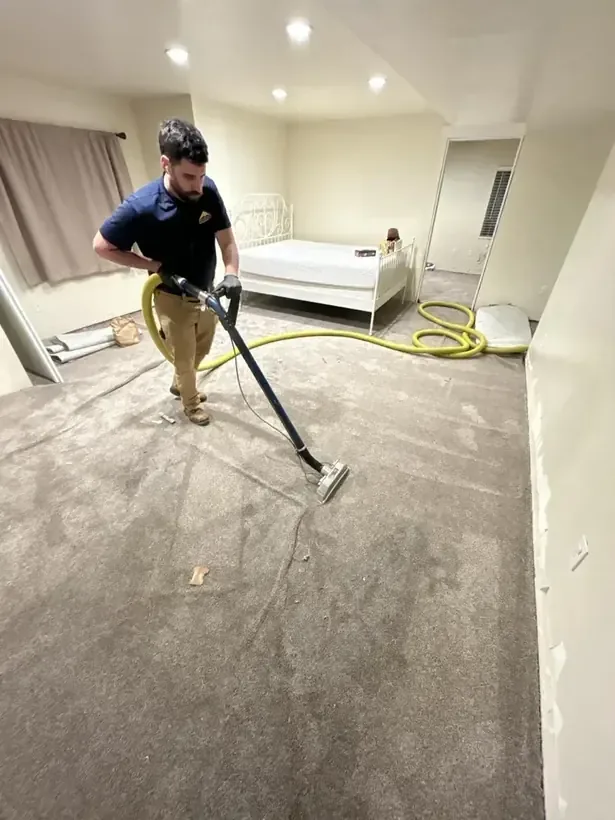
01Standing water comes out first with wands or truck-mounted extractors, then carpet, pad and wet baseboards are checked before drying begins.
Details for this service ›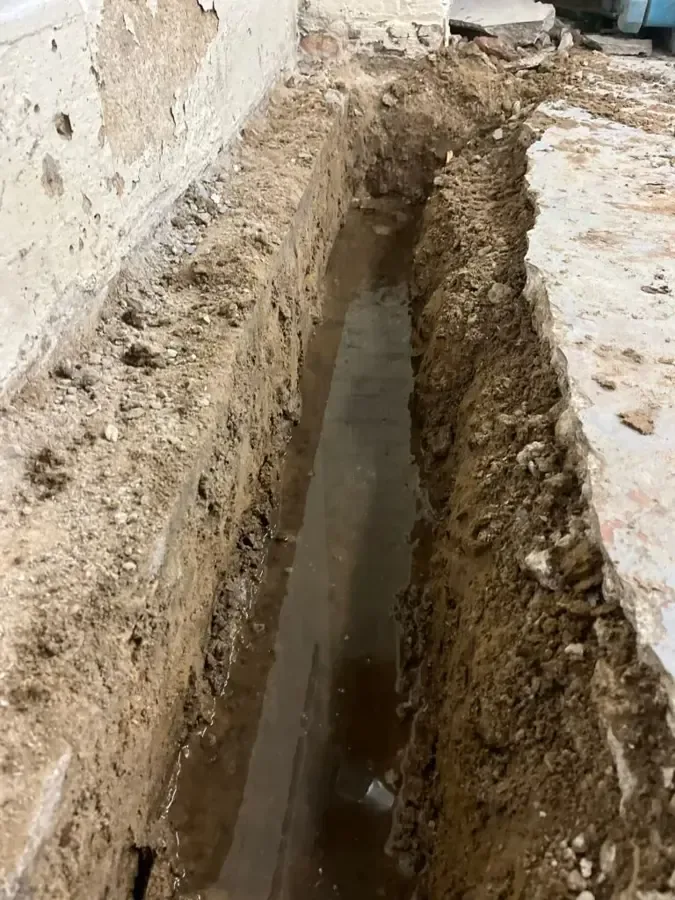 02
02A pipe leaking under concrete is traced, wet flooring is lifted, and the slab is dried until the readings settle.
Details for this service ›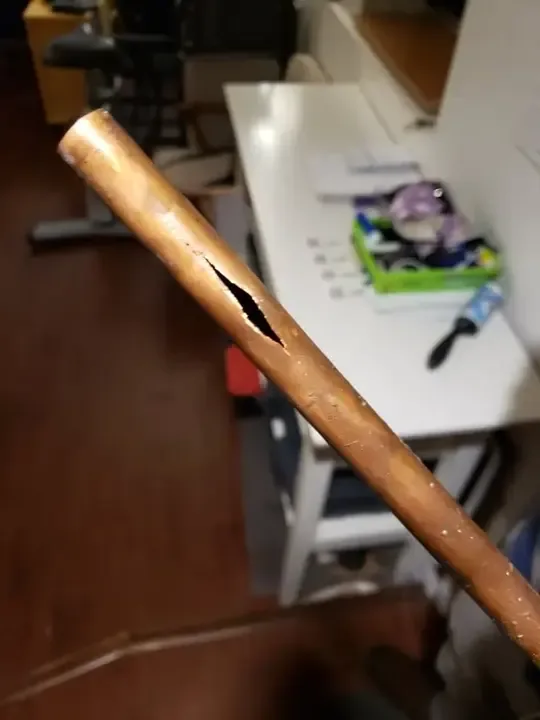 03
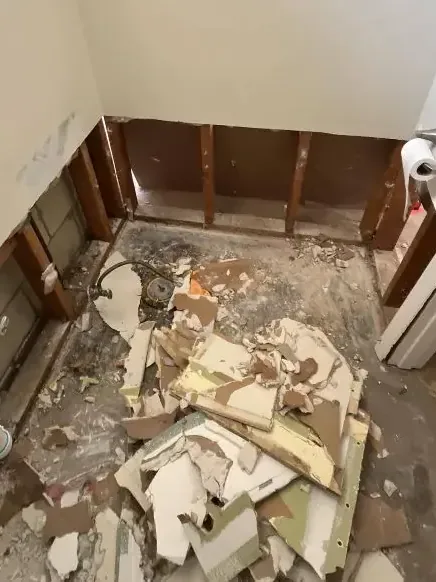
03A split or pinhole pipe is opened at the wet spot, the cavity is dried, and the repair is scoped on readings.
Details for this service ›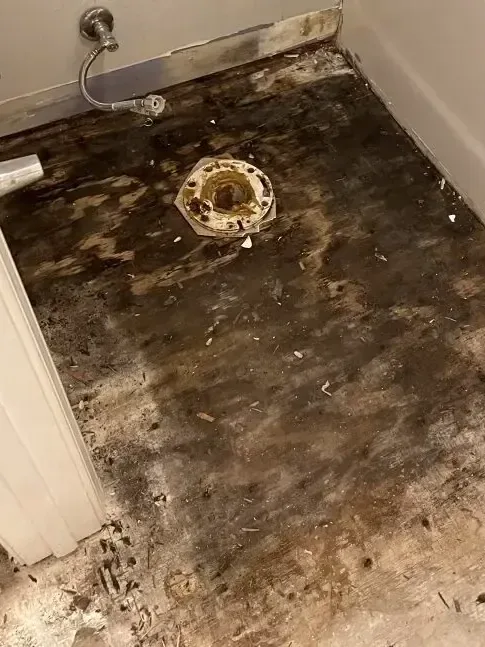 04
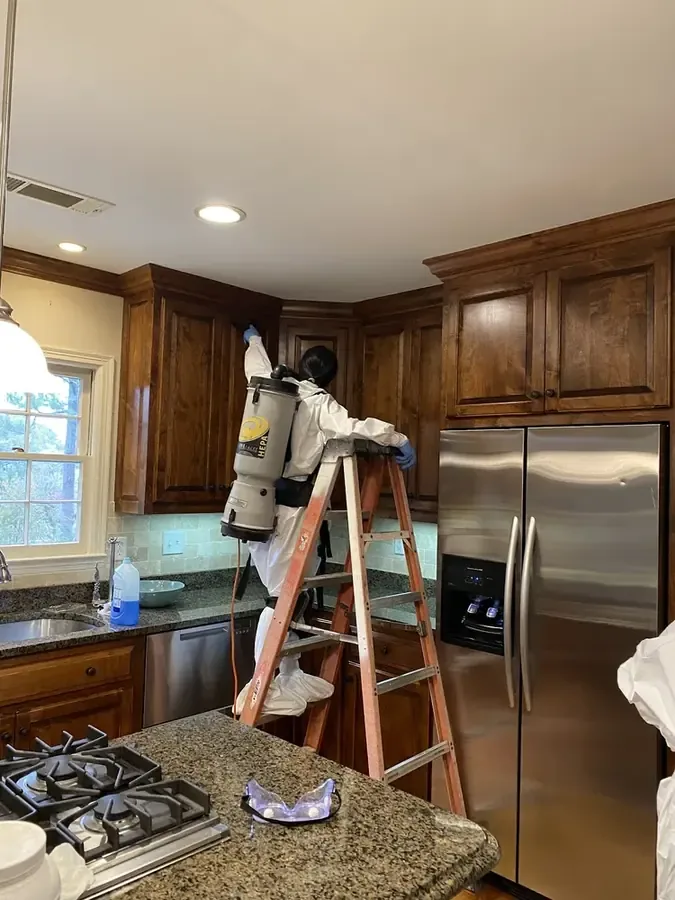
04Backups are handled as black water: contained, removed down to clean material, disinfected and dried with air scrubbers running.
Details for this service ›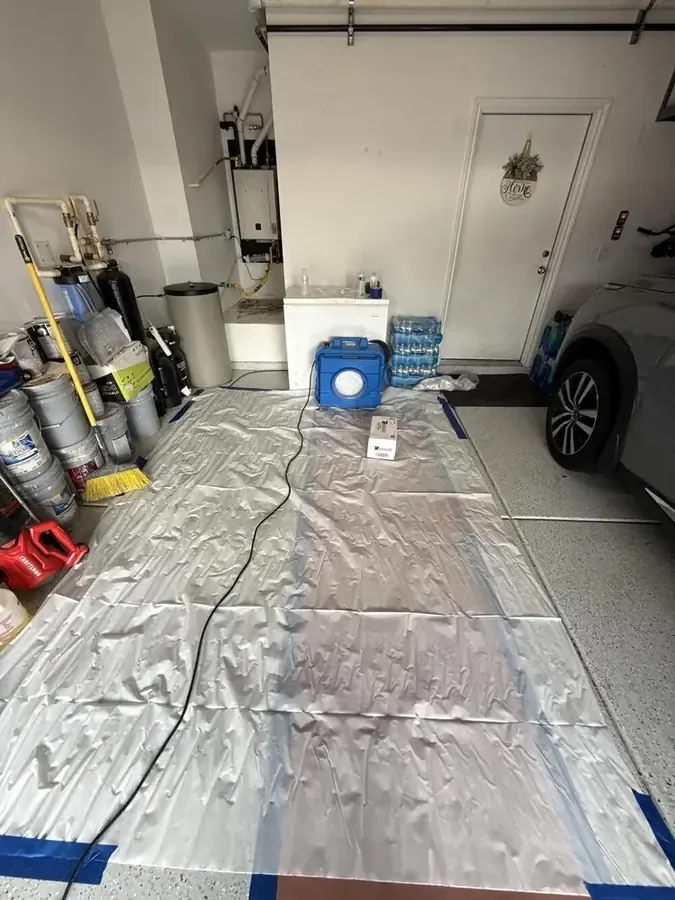 05
05Runoff or creek water that enters a garage or room is pumped out, mud is cleared, and the floor is dried and checked.
Details for this service ›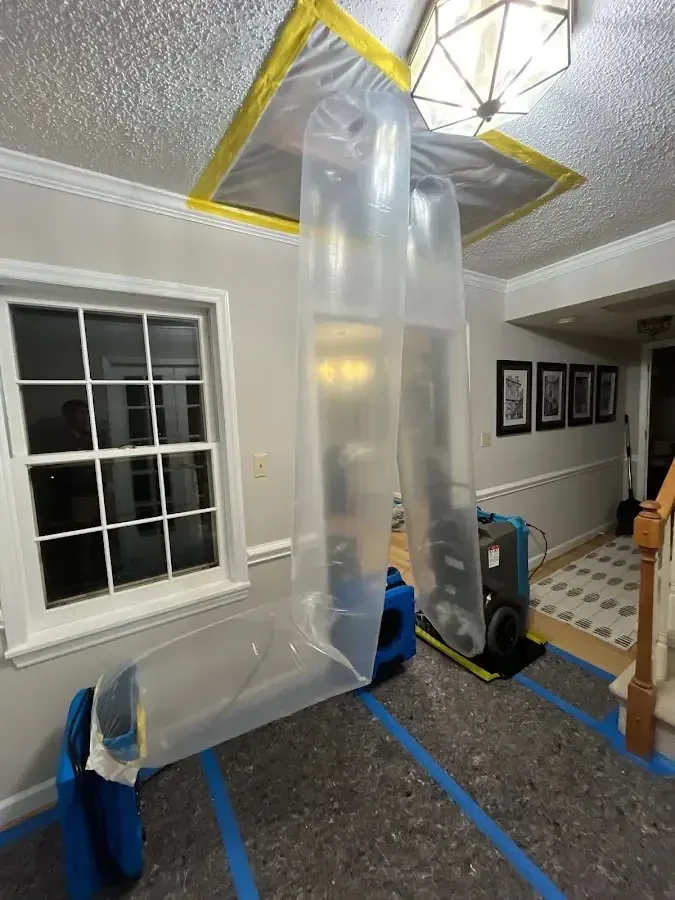 06
06Hard rain finds weak flashing or worn roofing, so attic insulation and ceilings are opened and dried above and below.
Details for this service ›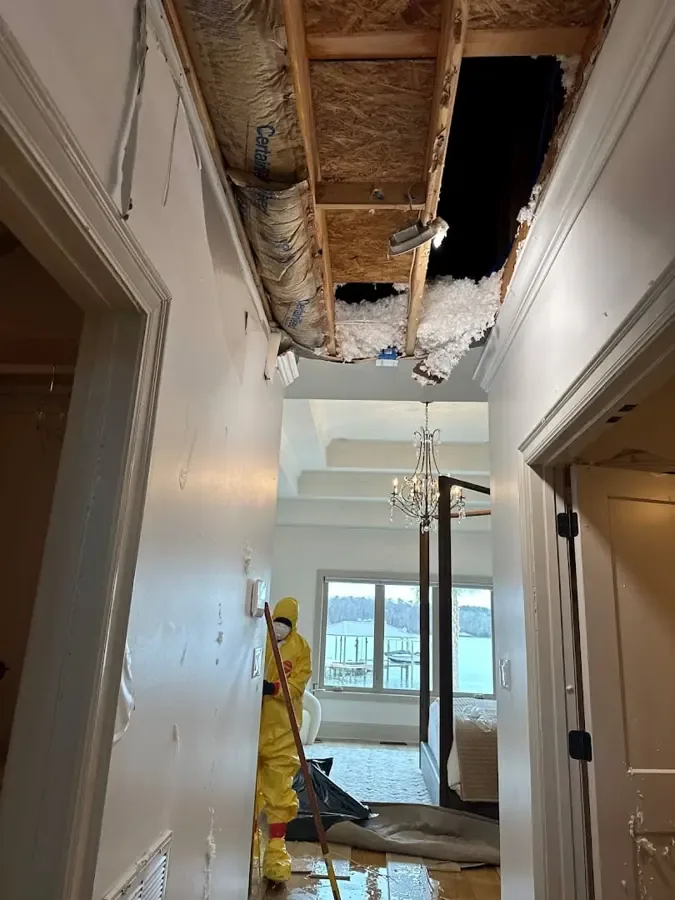 07
07A spreading ceiling stain is traced to the roof, a supply pipe or an air handler, then wet drywall and joists are dried.
Details for this service ›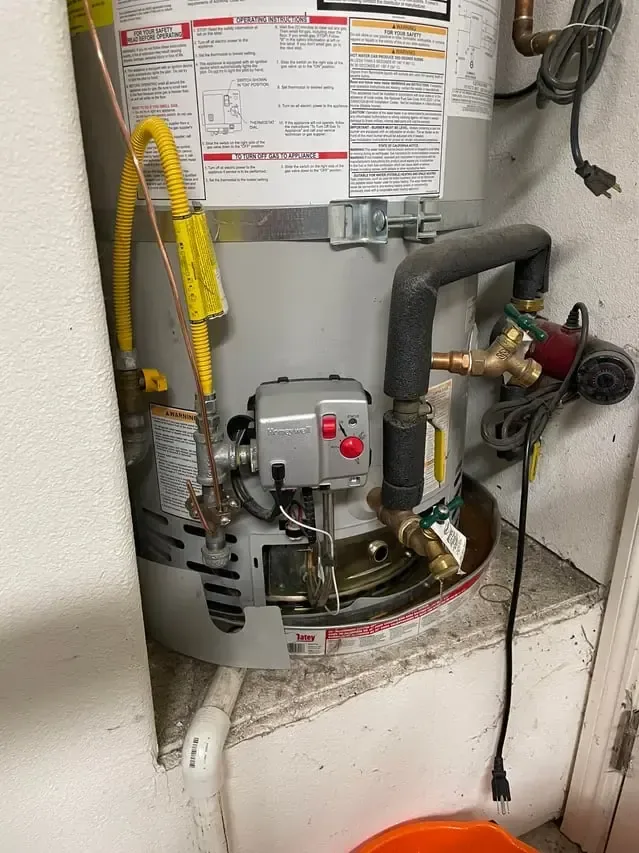 08
08A leaking tank soaks the garage slab first, then shared walls and nearby rooms, so contents are moved and the area dried.
Details for this service ›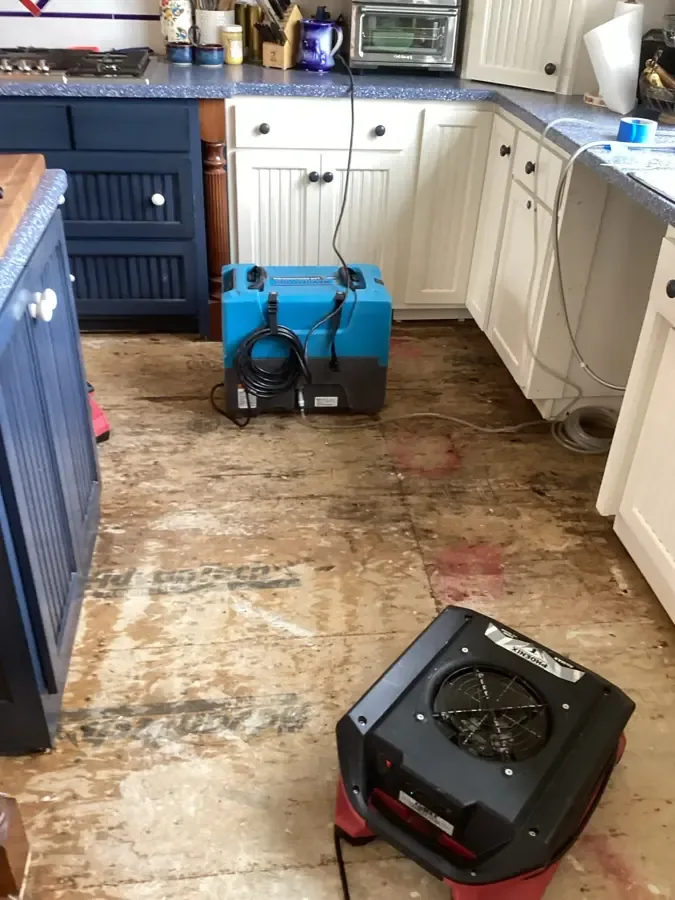 09
09A washer, dishwasher or AC drain pan that overflows can reach cabinets, subfloors and the unit below.
Details for this service ›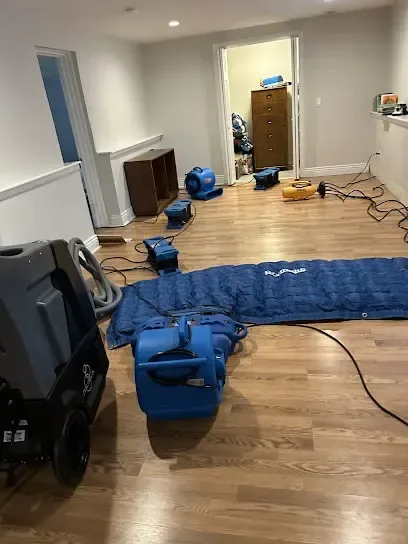 10
10Panel mats and dehumidifiers pull moisture from wood and laminate before the boards cup, with daily readings deciding what stays.
Details for this service ›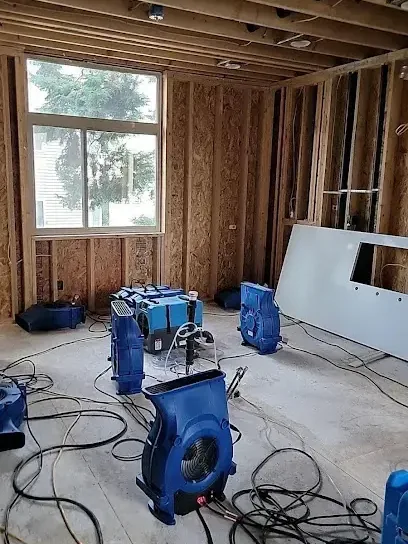 11
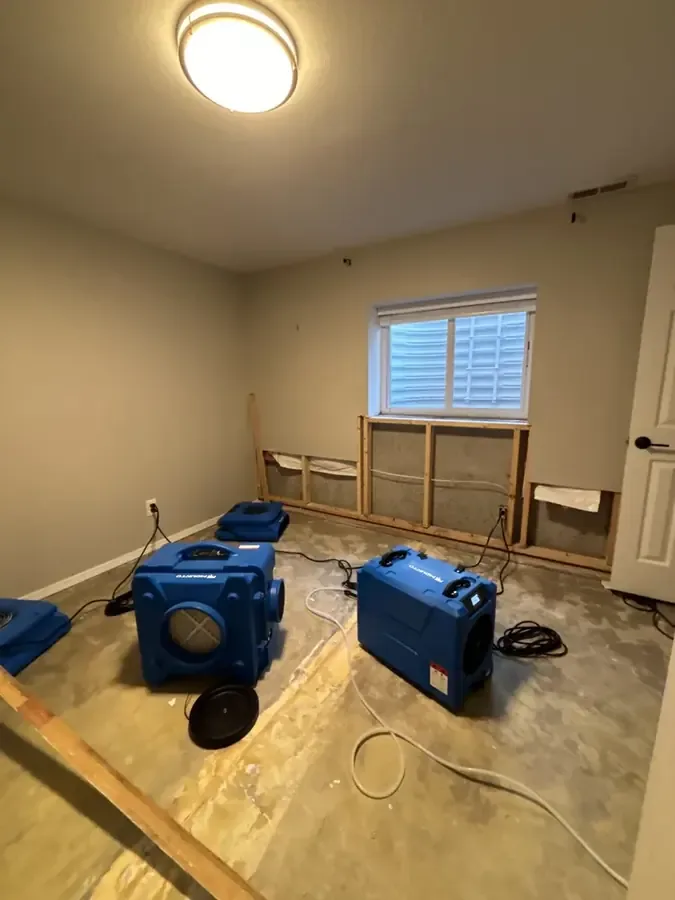
11Air movers and dehumidifiers run on a plan built from a moisture map, and the readings decide when the equipment leaves.
Details for this service ›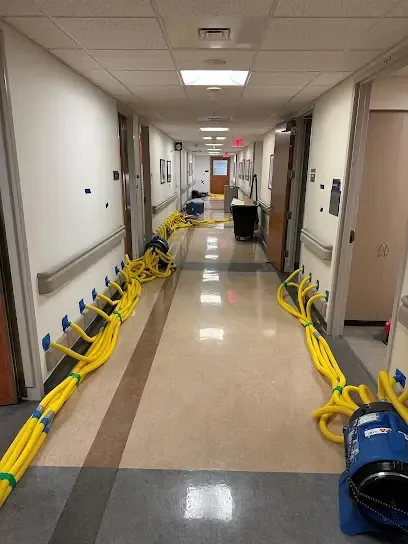 12
12Shops, offices and multi-suite buildings get phased drying, containment from neighbors and written reports for owners and insurers.
Details for this service ›A few simple actions early on limit how far the water spreads.
Close the shutoff valve at the fixture, or the main valve near the meter, and switch off power to any wet area before touching cords or outlets.
Lift rugs, electronics and furniture off wet floors, set foil or wood blocks under legs, and photograph everything before it is touched.
Household vacuums do not belong on standing water, sewage and drain water should be left alone, and everyone should stay out of the area.
Photograph the damage, note when the leak began, then call so extraction, drying and the insurance paperwork can all get started.
Water losses do not keep office hours, so emergency calls are welcome at any hour and passed to a crew trained in water work.
Probes and an infrared camera map wet drywall, wood and concrete, and every visit adds another entry to a written log.
Dated photos, moisture logs and equipment records are written up so an adjuster can follow the loss from first reading to dry standard.
Crews know the city Water Division and several other districts serve different parts of town, which helps trace where a leak sits.
The work covers water losses and sewage backups in homes and businesses: extraction, drying, removal of wet materials and records for insurers.
Rebuild carpentry, painting and other trades sit outside the scope, and the crew says so early so owners can arrange them in time.
A moisture map comes first, extraction second and equipment third. Air movers and dehumidifiers then run while a log records each reading, and the job closes only when materials reach their dry standard.
Meters and an infrared camera mark every wet wall, floor and ceiling before any equipment is placed.
Wands and pumps clear the surface, then wet pad and soaked trim come out so they cannot hold water.
Air movers and dehumidifiers are sized to the room and set so air crosses every wet surface.
Daily readings are compared with dry reference spots, and equipment stays until the numbers match.
A supply pipe, tank or overflowing fixture releases clean water. Early extraction and drying often save flooring and drywall, and little needs to be thrown away.
Slab leak drying steps ›Washers, dishwashers and AC drain pans release used but not sewage water. Porous materials that soak it up usually need removal, while hard surfaces can be cleaned.
Appliance leak cleanup ›Sewage or backed-up drain water carries contamination. Containment, protective gear and removal of porous material come before any drying starts.
Sewage backup cleanup ›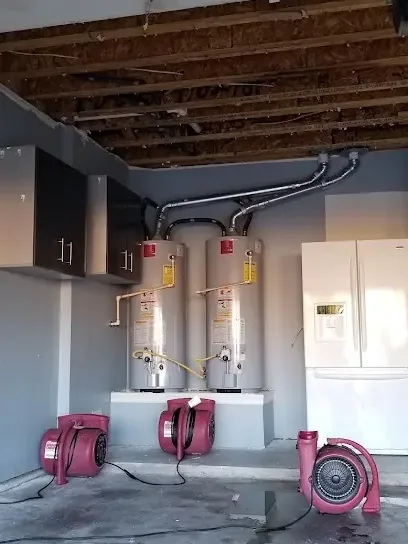
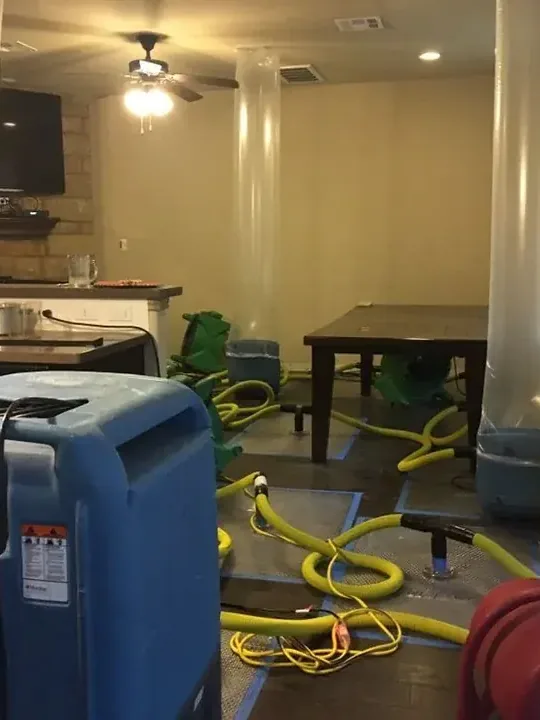
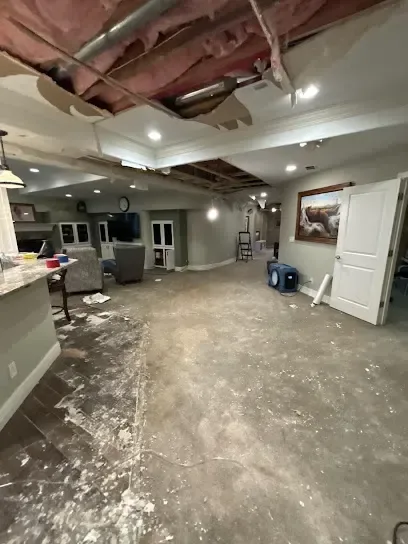
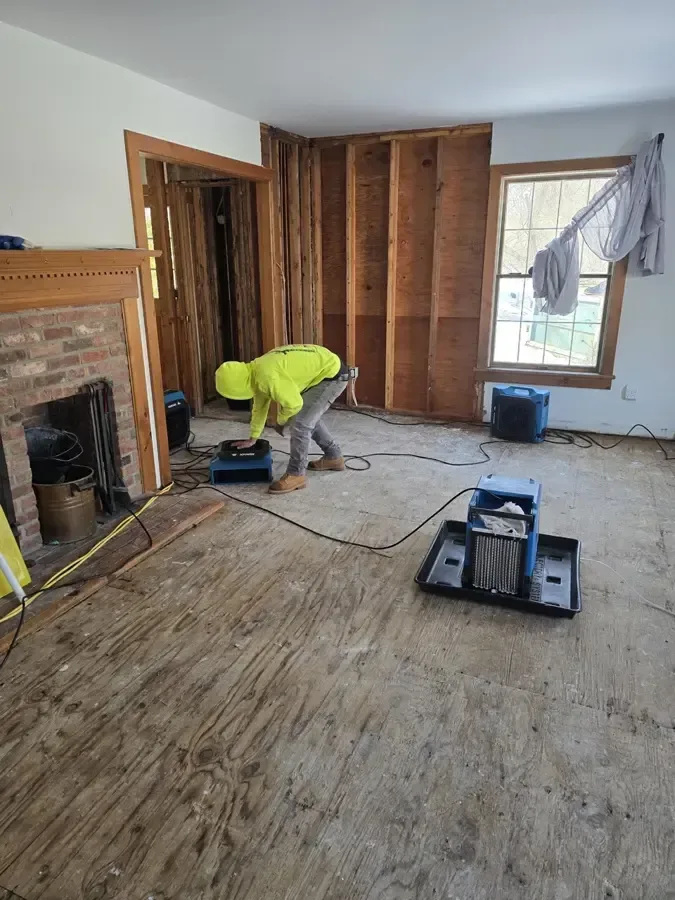
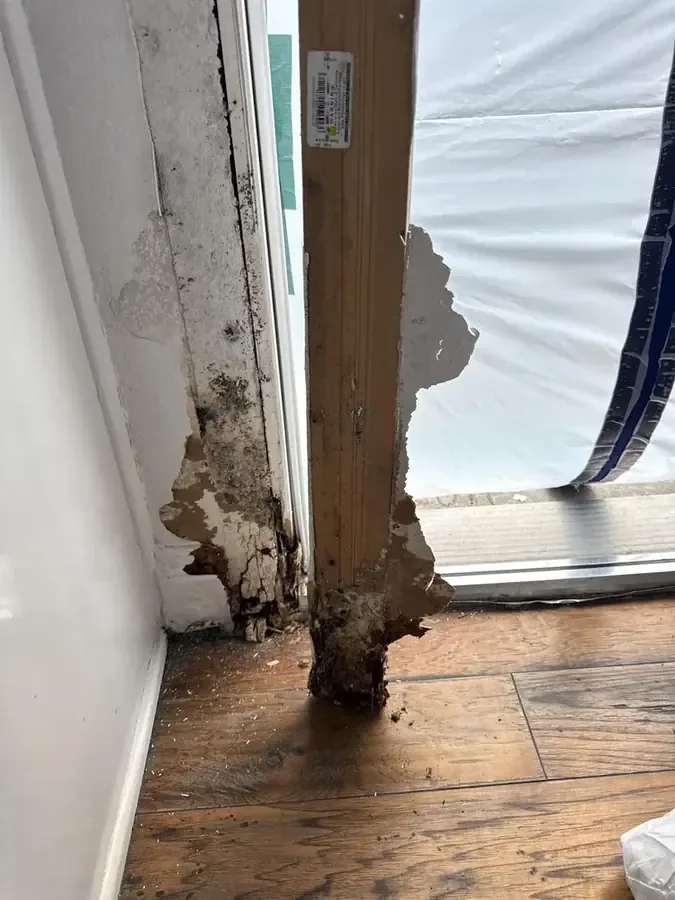
Crews work across Old Town, the hillside neighborhoods, retirement communities and newer developments, and every one of the three Camarillo ZIP codes is covered.
Neighboring areas are often covered too, so a call with the street name settles the question quickly.
Camarillo, CA · [email protected]
☎ Check an address nowAll three ZIP codes are served, along with the business districts around them. Browse every area served ›
Most losses land between $1,300 and $25,000, depending on the water category, how many rooms are wet and whether drywall and flooring must come out. A written scope sets the figure before heavy work starts.
Insurance may cover sudden water losses, so photos, readings and a written scope help an adjuster assess the claim. Final figures depend on the wet materials actually found.
Adjusters look for proof of what failed, when it happened and what was done about it. The crew builds that record from the first visit.
Owners can open the claim themselves by calling the insurer and sending photos, while the crew keeps drying and logs every reading for the adjuster to follow.
Policy wording decides what is paid, so ask the carrier about water, sewage and flood limits.
Water losses in Camarillo start in many places: aging pipes, appliance hoses, backed-up drains, storm runoff and creek channels. The public records below show how some of these have touched the city before, and what that can mean for an owner.
The median home was built in 1984, and 6,668 homes date from the 1970s, so many properties carry decades of wear on pipes, drains and appliance connections.
With 5,677 homes in buildings of five or more units and 8,656 renter-occupied homes, a leak in one unit can reach the home below it.
The Camarillo Sanitary District and the Camrosa Water District provide sewer service. The city names wipes, grease, cotton products, food scraps, hair and floss as top causes of blockages.
The Ventura County Watershed Protection District maintains Calleguas Creek, Conejo Creek and Revolon Slough, while the city Stormwater Division maintains curb inlets feeding underground conduits.
FEMA finalized new flood maps in January 2010 that put about 7,500 homes in a 100-year flood zone, which requires flood insurance for owners with federally backed mortgages.
Homes in Camarillo Springs, including those on San Como Lane and Gitana Avenue, sit below a hillside that burned in the Springs Fire in May 2013, and mud later flowed down it.
December 12, 2014: A mud and debris flow from the burned slope hit homes in Camarillo Springs, and county fire officials counted 16 homes damaged, with evacuations covering San Como Lane and Gitana Avenue.
Small clean-water losses often run from $1,300 to $6,000, several wet rooms or gray water reach $16,000, and sewage or whole-home losses can pass $25,000. A written scope comes before demolition.
Yes. Sewage backups are treated as black water, with containment, protective gear, removal of porous materials, disinfecting and drying. The city says a slow drain or stoppage is typically the property owner's responsibility.
The median home was built in 1984, and the largest group, 6,668 homes, dates from the 1970s. Age alone does not decide a leak, so each one is traced with meters.
The city Water Division maintains mains and service pipes up to and including the water meter. Other providers serve parts of town, including Camrosa Water District in Mission Oaks.
A permit is required in the city, according to The Camarillo Acorn in September 2024, and the Building and Safety page posts a Water Heater handout. The crew handles the water cleanup, not the permit.
Yes. About 5,677 homes sit in buildings of five or more units, so a washer, pipe or AC drain pan can send water through a floor or ceiling. Both units are dried and documented.
Ventura County hydrology pages record major flooding along Calleguas Creek and Conejo Creek in 1980 and 1983. FEMA maps from January 2010 also place about 7,500 homes in a 100-year flood zone.
On February 6, 1998, flash flooding led the city council to declare a state of emergency. About 40 homes and numerous businesses near US 101 were damaged, and water entered City Hall.
Shops, offices and outlets get phased commercial drying, containment from neighbors and after-hours work where needed. The city has Old Town, Camarillo Premium Outlets and business districts with biotech and manufacturing firms.
Meters compare wet materials with dry reference readings at each visit, as described under structural drying. Equipment is removed only after the numbers match, and the log is handed over for the insurance file.
Describe what happened, send a few photos, and a crew will plan extraction and a measured drying schedule.
☎ (888) 578-6508Get water out of the home