Water Extraction and Removal in Newbury Park, CA
Standing water is the most expensive water in the house. The extraction crew pulls it out of carpet, pad and hard floors first, then sets drying equipment sized to what is still wet.
☎ (888) 578-6508Pull the standing water out now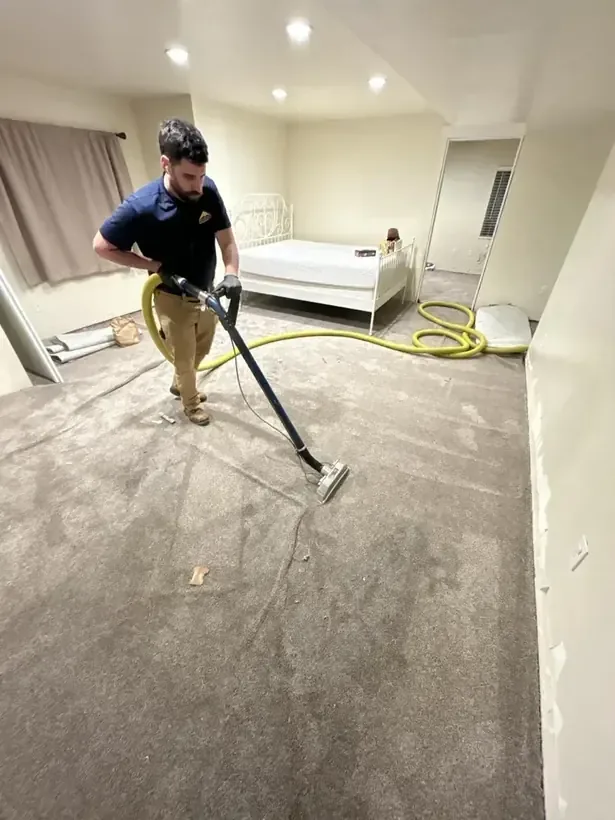
First steps for water extraction and removal, right now
- 1
Stop the source
Close the main shutoff or the fixture valve before anything else.
- 2
Kill wet circuits
Switch off breakers for wet rooms if the panel is dry.
- 3
Lift what you can
Move rugs, cushions and electronics off the wet floor.
- 4
Photograph it
Shoot the standing water and wet belongings before cleanup.
Extraction is the step that decides how long everything else takes. A gallon of water pulled out with a wand never has to be evaporated by an air mover, and carpet pad that is extracted hard enough can sometimes stay. In local slab-floor homes, water that is left standing spreads under baseboards and into the bottom few inches of drywall within hours.
The extraction crew starts at the source side of the room and works toward the door, so pulled water does not get walked back in. Truck-mounted units handle large areas and deep carpet; portable extractors reach upstairs rooms, condos and spots a hose cannot reach.
What does water extraction and removal cost in Newbury Park, CA?
Here, water extraction with the drying that follows typically runs $1,000 to $6,000 for one to a few rooms of clean water, and more when the water is dirty or reached a whole floor.
One room, clean water
- Extraction of carpet and pad
- Air movers and one dehumidifier
- Daily readings
Several rooms
- Truck-mounted extraction
- Pad replaced where needed
- LGR drying, three to five days
Whole floor or dirty water
- Carpet and pad removed
- Containment and antimicrobial
- Wall bottoms opened
Ranges are typical, not a quote: the water category, square footage, material class and how fast drying started move the number most. The water damage cost calculator gives a closer range.
How standing water is removed
- Truck-mounted extraction for whole rooms of carpet and pad
- Weighted or ride-on extraction tools that press water out of the pad
- Squeegee and wet vacuums on tile, vinyl and sealed concrete
- Submersible pumps when water stands deep in a garage or a low room
After the floor, the tech who does the walkthrough checks wall bottoms, cabinets and the room next door with pinless meters, because water rarely stops where it looks like it stopped.
Water standing on the floor? The extraction crew pulls it out 24/7.
☎ Start the pump-outWhen carpet and pad stay, and when they go
Clean water caught within a day or two often leaves carpet that can be dried in place, though the pad is cheaper to replace than to save. Gray water usually means the pad goes. Category 3 water, from sewage or storm runoff, means carpet and pad are cut out and bagged. The Ready.gov flood page explains why water that crossed the ground is treated as contaminated.
What happens right after extraction
Air movers and LGR dehumidifiers go in the same visit, sized to the room's evaporation load. Indoor air quality matters during drying, and the EPA indoor air quality pages cover why damp rooms need moving, dry air. Readings are logged every day until materials match a dry reference in the same home.
How water extraction and removal is handled, step by step
Find the edges
Meters show where the water spread under baseboards.
Extract
Truck-mount or portable units pull the standing water.
Set drying
Air movers and LGR dehumidifiers sized to the room.
Log readings
Daily checks until materials read dry.
What every water extraction and removal job is held to
Rapid local response
Dispatch runs around the clock, and active water is treated as urgent at any hour, weekends included.
IICRC S500 drying standard
Equipment is sized to the class of loss and stays until the readings say dry.
Claim-ready documentation
Moisture maps, daily logs and photos taken before anything is torn out.
Conejo Valley water know-how
Slab homes, garage water heaters, attic AC and winter hillside runoff.
Water extraction and removal across the Conejo Valley
Coverage runs across ZIP 91320 and 91319: Dos Vientos, Casa Conejo, the Rancho Conejo business park and the streets off Borchard Road, Reino Road, Wendy Drive and Ventu Park Road.
Nearby coverage reaches Thousand Oaks, Westlake Village, Oak Park, Camarillo, Camarillo Springs, Santa Rosa Valley, Moorpark.
Related water damage services
Water Extraction and Removal questions
How soon should standing water be extracted?
As soon as possible. Clean water starts wicking into drywall and degrading toward a dirtier category within a day or two, and mold growth can begin within 24 to 48 hours on wet materials.
Can a wet vac do the same job?
A shop vac lifts surface water but cannot pull water out of the carpet pad or the slab edge. Truck-mounted and weighted extraction remove far more, which shortens drying time.
Will my carpet have to be thrown out?
Not always. Carpet wet with clean water and extracted quickly is often dried in place. Pad is usually replaced, and anything touched by sewage or storm runoff is removed.
Does extraction work on hardwood and tile?
Yes. Hard floors get squeegees, wet vacuums and, on wood, panel drying mats. Water under tile and wood is found with meters, not by looking.
How long does drying take after extraction?
A contained clean-water loss usually dries in three to five days. Wet concrete, hardwood and walls soaked high take longer, and equipment stays until readings say dry.
Is water extraction covered by insurance?
Extraction after a sudden and accidental leak is often part of a covered claim, while flooding from outside usually needs flood coverage. Coverage depends on your policy, so check with your own insurer.
Standing water in the house? Get it out before it spreads.
Every hour water sits it spreads further under baseboards and into drywall. The extraction crew starts at the source.
☎ (888) 578-6508Extraction dispatch, day or night