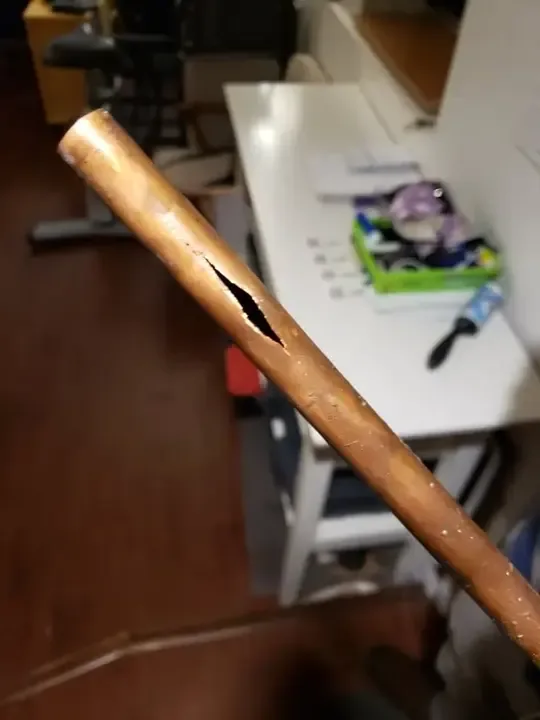
About 60 percent of Santa Paula housing units were built before 1970, and the oldest homes cluster around downtown and Main Street. When a pipe bursts in a house of that age, the speed of the first response decides how much of the house gets wet.
Key takeaways
- SCAG year built data shows about 60 percent of Santa Paula housing units were built before 1970.
- Shut off the main water valve first, since that stops the leak even when the broken pipe cannot be seen.
- Water from a burst pipe travels inside walls, so ceilings, floors and rooms away from the break can be wet.
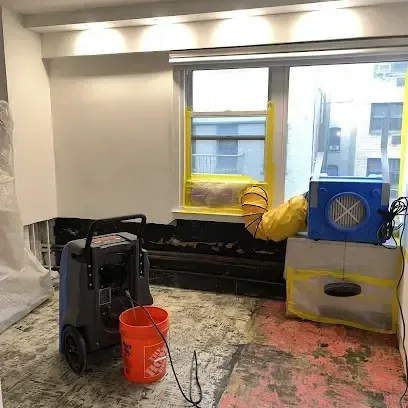
- Opened wall cavities are dried with air movers and dehumidifiers until readings reach the dry reference.
- A plumber repairs the pipe, and the drying can run alongside the repair.
Why housing age matters here
SCAG housing data shows 22.2 percent of Santa Paula units were built from 1960 to 1969, 15.6 percent from 1950 to 1959, 7.7 percent from 1940 to 1949 and 14.5 percent in 1939 or earlier. Added together, that is about 60 percent before 1970.
Downtown Santa Paula is centered on Main Street, which has the oldest homes in the city, often bungalows, cottages, Victorian style houses and craftsman homes.
Age alone does not say what pipe sits inside a wall. A plumber confirms that on site, and the cleanup does not assume it.
The housing mix is wide. California Department of Finance 2020 unit estimates, shown by SCAG, put the city at 58.1 percent single family detached homes, 7.9 percent single family attached, 10.0 percent in buildings of 2 to 4 units, 14.8 percent in buildings of 5 or more units and 9.3 percent mobile homes.
So a burst pipe here can hit a house, an apartment or a mobile home, and the first steps are the same in each.
- A joint or fitting that has weakened over time gives way.
- A pipe wears thin from the inside and splits.
- A tiny pinhole grows into a steady spray.
- A shutoff valve that has not been turned in years fails when it is finally used.
Shutoff first, everything else second
The only urgent job in the first few moments is to stop the flow. A burst pipe can release a great deal of water before the household understands what happened.
Once the water is off, the next jobs are safety and records.
About 45.3 percent of local households rent, so a tenant often has to reach a landlord before a valve can be found. A short message to the owner or manager belongs in the first steps.
- Close the main water valve where the supply enters the house.
- Open a faucet at the lowest point to drain what is left in the pipes.
- Turn off power to wet rooms only if the panel is dry and easy to reach.
- Photograph the wet walls, floors and ceilings before moving anything.
- Move furniture, rugs and electronics away from the wet area.
Following the water through the house
Water does not stay where a pipe breaks. It runs along framing, down inside walls and across floors toward the lowest point.
The break itself may be small. A pinhole sprays for a long time, while a split pipe floods fast, and both end up behind walls where nobody sees them.
Inside walls and ceilings
A break above a ceiling can wet insulation and drywall far from the pipe. Stains, bubbling paint and soft spots show where the water has gone.
- A brown stain that spreads on a ceiling.
- Paint that bubbles or peels low on a wall.
- Baseboards that look swollen or feel soft.
Under floors and across rooms
Water can slip under baseboards and spread beneath flooring into a hallway or bedroom. A room that looks dry can still hold water under the floor.
- Carpet that feels damp near a wall.
- Flooring that cups or lifts along the edges.
- A musty smell that fades and returns.
Opening and drying the cavity
Drying starts with moisture mapping. Meters and a thermal camera show where water went, and the crew cuts the smallest openings that give air access.
Wet insulation is removed, since it holds water against framing. Air movers and dehumidifiers then run until readings reach the dry reference.
Older construction sometimes calls for extra care when walls are opened, so the crew works carefully, bags debris and keeps dust contained.
The structural drying process shows how openings stay in place until the framing is dry.
- Baseboards come off first, and small holes are cut at the bottom of wet walls.
- Soaked drywall is cut out above the waterline.
- Wet insulation is bagged and discarded.
- Equipment stays in place until each reading is at the dry reference.
Repair and drying in the right order
A plumber repairs the pipe, and the restoration crew handles the water and the wet materials. The two jobs can run side by side, so the house does not wait.
Walls and ceilings are closed only after readings are dry. Closing a wall too early traps moisture where nobody can see it.
Documented readings also give the household and the plumber a record of what was wet and when it dried.
The burst pipe water damage work in Santa Paula follows that order every time.
Getting ready for the next failure
Older homes reward a few simple habits. A household that knows its valves and its meter can stop a leak long before it reaches the ceiling.
The water damage page for the area lists every service, and the main burst pipe page for Newbury Park explains the same process.
- Find the main shutoff valve now, and make sure it turns.
- Check under sinks for drips, stains and corroded fittings.
- Watch the water bill for jumps that nobody can explain.
- Replace old shutoff valves that stick before they are needed.
Questions
How fast does water spread after a pipe bursts?
Quickly. A burst supply pipe runs at full pressure until the valve is closed, and the water follows framing and flooring away from the break. Even a short run can wet several rooms.
Can an older home with a burst pipe be dried without opening walls?
Sometimes, when the water is shallow and readings show it stayed on the surface. When water is inside a wall cavity, small openings give the air access that surface drying cannot, so the crew decides from readings and not from appearance.
Does an older home dry differently than a newer one?
The drying method is the same, which is readings and airflow. An older home can hold surprises behind walls, so the crew checks beyond the visible stain.
Who repairs the broken pipe?
A plumber repairs or replaces the pipe. The restoration crew extracts the water, removes wet materials and dries the structure.
When can the walls be closed up?
When the readings are dry. A moisture meter, not the look of the surface, shows when the cavity is ready.
What happens with the water bill after a burst pipe?
The meter records the water that passed through, so a burst pipe often shows up as a high bill. Keep the bill and the dates with the photos and notes.