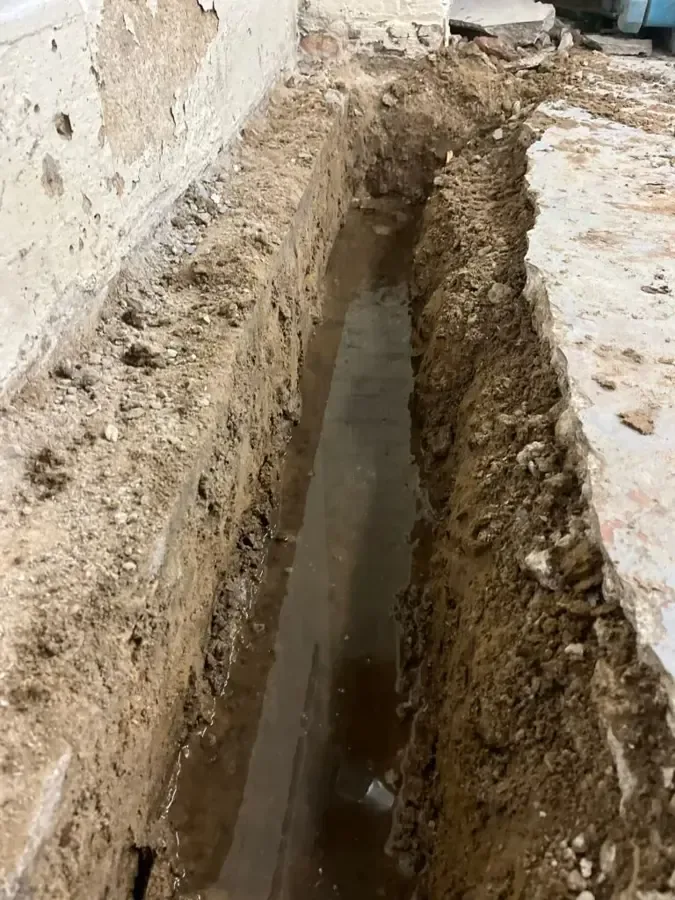
A slab leak is a supply pipe leaking in or under a concrete floor, where nobody can see it. In Newbury Park, where most homes are ranch and tract houses from the 1960s to the 1980s, the first clue is often a sound, a warm spot or a water bill that does not add up.
Key takeaways
- A slab leak is a supply pipe leaking under or inside a concrete floor, so the first signs show up at the surface.
- Common signs are warm floor spots, the sound of running water with every fixture off, a meter that keeps moving and damp baseboards.
- A simple meter test with every fixture off can confirm that water is moving when it should not be.
- The leak is traced, the flooring above is lifted and the slab and nearby walls are dried to readings.
- Whether a home has a slab floor depends on how it was built, and a plumber can confirm it.
What a slab leak is
A slab leak happens when a water supply pipe develops a pinhole or crack in or under the concrete floor of a home. The water has nowhere obvious to go, so it works its way upward.
Not every home has a slab floor. Whether a given house does depends on how it was built, and a plumber or the original plans can confirm it.
The water bill often tells the first story. A leak that runs day and night adds up on the meter long before a stain appears.
- Water rises through cracks and joints in the floor.
- Water travels along the underside of the slab and surfaces elsewhere.
- Flooring above the leak absorbs moisture and starts to swell or lift.
- The bottoms of walls pick up water from the floor.
Signs inside the home
Slab leaks rarely announce themselves loudly. The clues are small, and they tend to build over days or weeks.
One sign can mean many things. Two or three together make a slab leak much more likely.
A warm spot points more often to a leaking hot water pipe, while a cold water leak tends to show as damp flooring and a moving meter.
- A warm or hot spot on the floor that cannot be explained.
- The sound of running water when every fixture is off.
- A water meter that keeps moving when nothing is in use.
- A water bill that jumps with no change in habits.
- Low water pressure at several fixtures.
- Damp, swollen or stained baseboards.
- Flooring that cups, buckles or feels soft in one area.
A simple meter check
One test needs no tools and takes only a few steps. It shows whether water is moving when it should not be.
The slab leak sign checker walks through these signs in order.
- Turn off every fixture and appliance that uses water, including the ice maker.
- Find the water meter and check its leak indicator or dial.
- Wait a short while and look again. Movement means water is flowing somewhere.
- Write down the reading and the time so a second check shows how much moved.
- Remember that a moving meter shows a leak exists but not where it is.
How the leak is found and reached
Finding a slab leak is detective work. A plumber narrows down the location before anything is cut.
Tracing
Listening devices pick up the sound of water in a pipe, and a thermal camera can show a warm path through the floor. Pressure tests can confirm which section of pipe is leaking.
Guessing is costly, since cutting the floor in the wrong place adds damage and delay.
- Listening gear finds the spot of loudest flow.
- Thermal imaging shows warm paths under flooring.
- Pressure tests isolate the leaking section.
Opening the floor
Once the spot is known, the flooring above it is lifted. A section of the slab may be cut to reach the pipe, or a plumber may reroute the supply through a wall or attic.
- The choice between repair and reroute is the plumber decision.
- The restoration crew handles water already in the flooring and walls.
- Readings from the trace go to the household so the decision is an informed one.
Drying the slab and the rooms around it
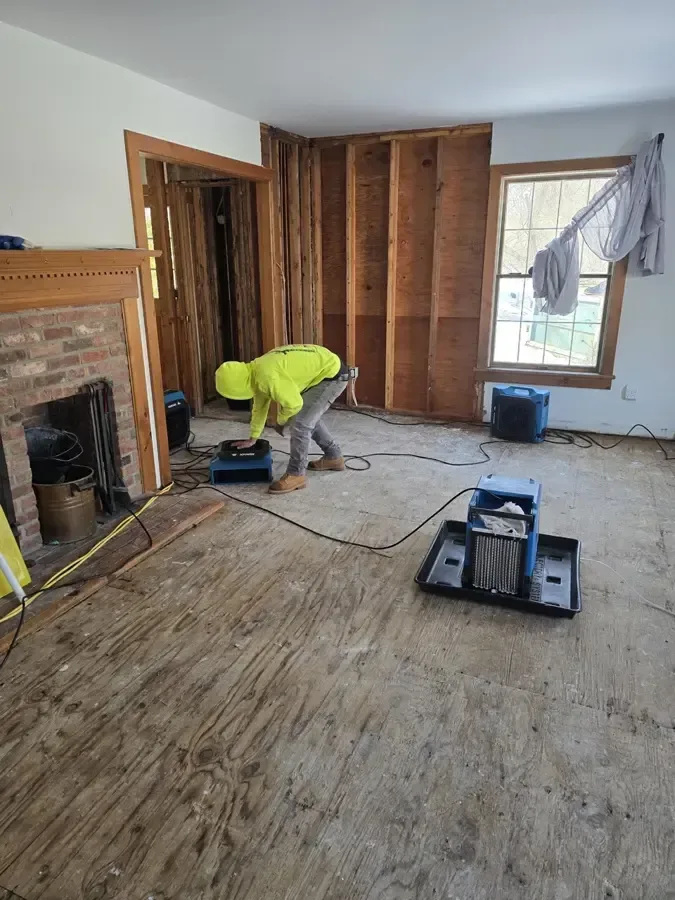
Concrete holds moisture for a long time, so the slab is read and dried, not assumed dry. Wood floors and laminate over a slab are judged board by board, since some dry in place with mats while others cup or swell and have to be replaced.
Low grain refrigerant dehumidifiers pull water out of the air, and mats or air movers push dry air across the floor.
Walls beside the leak are checked from the bottom up, and baseboards come off so the cavity can breathe. The slab leak water damage process runs from tracing through final readings.
The structural drying readings show when the slab and walls are ready for new flooring.
- Wet carpet and pad are lifted and discarded.
- Laminate and wood floors are pulled when readings show they cannot dry in place.
- Slab readings are repeated until they are at the dry reference.
- Baseboards and the bottom of nearby walls are checked before anything is closed up.
Older tracts and newer neighborhoods
Newbury Park includes early tracts such as Casa Conejo, ranch and tract homes from the 1960s to the 1980s and Dos Vientos, which was built out from the late 1990s on.
The age of a home says little about where its pipes run. The trace and the readings do.
A newer home can have a leak, and an older home can go years without one, so the signs matter more than the date on the plans.
Newbury Park sits inside the City of Thousand Oaks, and the Thousand Oaks slab leak page describes the same steps for homes across the city.
Questions
Can a slab leak be seen from the surface?
Often not. The clues are a warm spot, a sound, a moving meter or damp baseboards. A trace is needed to find the actual spot, since water can travel before it shows.
Does a warm spot on the floor always mean a slab leak?
No. A warm spot can come from a hot water supply pipe leaking or from other sources, so a trace and a meter test confirm it. Other signs, such as a moving meter, make the diagnosis firmer.
Will the whole floor be torn out?
No. Only the flooring above the leak and the wet materials are lifted, and the slab is cut only where the pipe is reached.
How long does the slab take to dry?
The slab dries until the readings reach the dry reference. A long leak takes longer than a short one, and the crew rechecks the readings instead of guessing. Flooring goes back only after the slab reads dry.
Can drying start before the plumber finishes?
Yes, as soon as the water is stopped. Extraction and drying can run beside the repair, so the floor and walls do not sit wet.
Should the main valve be closed while waiting for help?
Yes. Closing the main valve stops the water from moving and limits the damage. It also lets the plumber trace the leak with the system quiet.