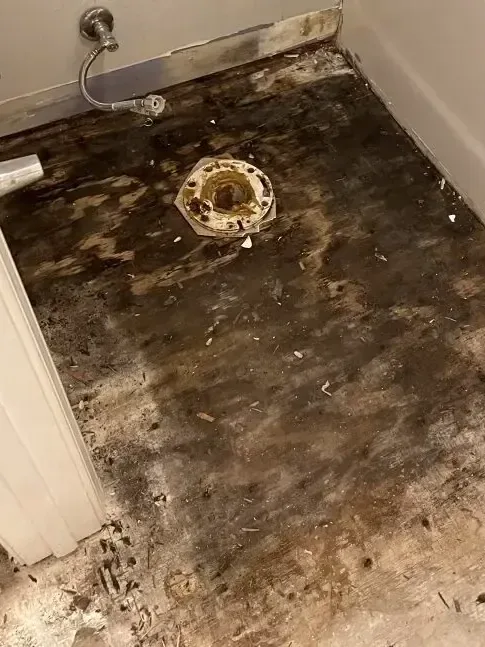
A toilet that gurgles, a tub that fills with gray water or a floor drain that bubbles can all mean sewage is coming into a Moorpark home. The water is contaminated from the first moment, so the response starts with safety.
Key takeaways
- Sewage water is Category 3, the most contaminated category, and it is handled with protective gear.
- Stop using water in the house and do not flush until the blockage is found.
- Porous materials that sewage touched, such as carpet, pad and drywall, are removed instead of dried.
- Ventura County Waterworks District No. 1 runs the sewer collection system and the Moorpark Water Reclamation Facility.
- Finding the blockage is a plumber job, while the cleanup deals with what is already inside.
Why sewage is handled differently
Sewage water is classed as Category 3 in the S500 water damage standard. It carries waste and bacteria, so it is not treated like water from a broken supply pipe.
Carpet, pad, drywall and insulation that absorb it cannot be made safe by drying alone.
Not every wet drain is sewage. Water from a sink supply pipe is clean, while anything that rises from a drain or toilet is treated as contaminated.
- A toilet overflow that carries waste.
- A floor drain or tub backing up from the sewer.
- Gray water that has mixed with waste.
Early signs and where a backup shows up
Sewage looks for the lowest opening in the house. That is usually a floor drain, a shower or tub, or a toilet on the lowest floor.
A backup rarely arrives without warning, and acting early can keep the mess to one room.
Early warning signs
Several small signs often show up in the days before the water appears. The same signs apply from Old Town homes to the newer neighborhoods.
- A toilet that gurgles when a sink or washer drains.
- Water rising slowly in a tub or shower when another fixture is used.
- Slow drains in several fixtures at once.
- A sewage smell near a floor drain or the lowest bathroom.
Toilets, tubs and showers
A backup that pushes up through a tub or shower often signals that the stoppage is past the point where several drains meet. The restoration work is the same either way, though the plumber needs that clue.
Floor drains and the laundry area
Laundry drains and garage floor drains can overflow when a washer empties into a blocked pipe. Water can then spread across a slab and under walls.
Water that travels under a wall can wet the room next door without any sign on the surface.
- Check any room next to the laundry area for damp baseboards.
- Tell the plumber which fixture backed up first.
The first steps
The first moments are about limiting contact and stopping more water from going down the drain.
Everyone in the house needs the same instructions, since one flushed toilet can add to the overflow.
- Stop using sinks, showers, washers and dishwashers, and do not flush.
- Keep children and pets out of the wet area.
- Avoid walking through the water and wash hands well after any contact.
- Do not use a household vacuum or fans on the area, since they spread contamination.
- Turn off power only if the panel is dry and easy to reach.
- Photograph the water and the affected rooms before cleanup begins.
What the cleanup removes and treats
The crew wears protective equipment and works from the cleanest areas to the dirtiest. Standing sewage is extracted first.
Then everything the water touched is sorted into what can be cleaned and what has to go.
Nothing is thrown out without a photo, so the record shows what was lost.
- Carpet and pad are cut up and removed.
- Drywall wet with sewage is cut out above the waterline.
- Hard floors and surfaces are cleaned and treated.
- Soaked cardboard, upholstery and fabric items are discarded.
The public sewer system and the home side
Water and sewer service for the whole city comes from Ventura County Waterworks District No. 1, from Old Town Moorpark to the newer neighborhoods south of Los Angeles Avenue. The district owns, operates and maintains the sewer collection system and the Moorpark Water Reclamation Facility.
A backup that reaches several homes at once can point toward the sewer mains, so mentioning it to the district is sensible.
Who owns the pipe between a house and the main is a question for the plumber and the agency, not the cleanup crew.
The same steps apply anywhere in the city, and the main sewage backup cleanup service page and the full list of local services show how the work fits together.
Drying, treatment and final readings
After the contaminated materials are out, the structure is dried and checked. The sewage backup cleanup in Moorpark is finished with surface treatment and moisture readings.
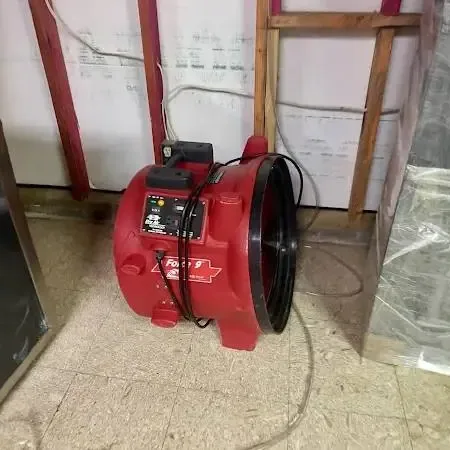
Air movers and dehumidifiers dry the subfloor and the lower wall cavities, and the structural drying readings show when the work is done.
- The subfloor and slab are checked, not assumed dry.
- Cut wall sections stay open until readings are at the dry reference.
- A final check confirms that the treated surfaces are clean before rebuilding.
Protecting the household during cleanup
The cleanup area is sealed off or kept clear while the crew works. People who are pregnant, elderly or ill are best kept away from it.
Everyday habits matter too, since contamination travels on shoes, hands and pet paws.
- Keep children and pets in a clean part of the house.
- Wash hands with soap after touching anything near the affected area.
- Wash clothes that touched sewage water separately from the rest.
- Leave the work area door closed so air does not carry odor through the house.
Questions
Is sewage backup the same as a clogged drain?
A clog can lead to a backup, but the two are not the same. A clog is a blockage in a pipe. A backup is the contaminated water that comes into the house when that blockage stops the flow.
Can wet carpet be saved after a sewage backup?
Usually not. Carpet and pad absorb contaminated water, and drying does not make them safe again, so they are removed.
Should the house be ventilated?
Opening windows is reasonable for odor, but fans that push air across the wet area are avoided because they spread contamination. The crew controls airflow during the work.
Does the whole room need to be cleaned or only the wet area?
The wet area and everything it touched need cleaning, and the surrounding surfaces are checked. Readings and a visual check of the edges show how far the water traveled.
Who fixes the blockage?
A plumber finds and clears the blockage, sometimes with a camera. The restoration crew handles the water, the contaminated materials and the drying afterward.
Can the family stay in the house during cleanup?
Often yes, if the affected area is sealed off and the main living spaces are untouched. A backup that reaches several rooms can call for staying elsewhere, and the crew explains what is safe for the layout.