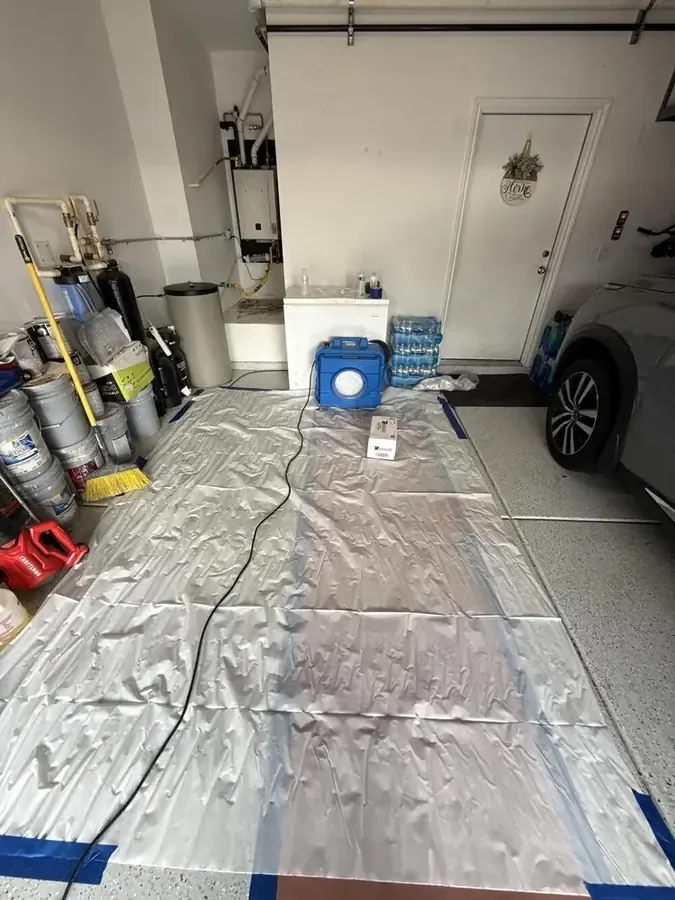
Sespe Creek, called the Sespe River in town, runs beside Fillmore and flows into the Santa Clara River. When the creek runs high, the effects reach streets, orchards and homes close to its banks.
Key takeaways
- Sespe Creek is a tributary of the Santa Clara River and runs beside the city.
- The city offers sandbags at the fire station during flooding after a call, with limited resources.
- City guidance says sandbags should not be placed directly against the outer wall of a building, because wet bags add pressure on the foundation.
- Storm water carries mud and debris, so extraction, mud removal and drying are three separate jobs.
- The first day is about safety, photos, lifting belongings and pulling the water out.
Sespe Creek and the history of high water
National Weather Service flood impacts for Sespe Creek near Fillmore list orchards along the creek, bank protection along Goodenough Road north of town and the railroad bridge along Old Telegraph Road among places at risk.
Agriculture, including orchards along the creek corridor, is a major part of the local economy, so the corridor is both farmland and flood path.
None of this means flooding is constant. Many winters pass with only high water along the banks, and the record explains why local households keep sandbag details handy.
- 1914: major flooding on the Santa Clara River and Sespe Creek washed away the railroad bridge over the Sespe.
- 1969: the Sespe Creek levee broke, and water flowed into Shiells Park and the surrounding orchards.
- 1978: the Sespe flooded and the highway bridge washed out. Deep water flooded the Los Serenos tract on the west side of town.
- 2005: heavy rain and early snowmelt swelled the Santa Clara River and closed highways, cutting off access to town for several days.
- February 19, 2024: the Old Telegraph Road bridge stayed closed as water rushed along Sespe Creek and into the Santa Clara River.
- January 8, 2026: the Fillmore Gazette reported that Sespe Creek was threatening homes and eroding the edges of properties on Grand Avenue after two winter storms.
Sandbags the way the city describes them
Residents inside city limits can pick up sandbags at the Fillmore Fire Station during flooding, after calling first. The city says the program has limited resources, so supplies are not unlimited.
City guidance also says not to place sandbags directly against the outer wall of a building, because wet bags add pressure on the foundation. Before the atmospheric river storm forecast for December 23 to 26, 2025, the city stocked sandbags.
- Call before driving to the station.
- Keep bags off the outer wall itself, as the city advises.
- Expect limited supply and plan early.
- Check on neighbors who may need help lifting and placing bags.
- Remember that bags do not replace extraction once water gets inside.
The first day after water gets in
A flooded home is a hazard before it is a cleanup job. Water can carry mud, debris and contamination from the creek corridor.
Documentation matters most on the first day, because mud and water are cleaned away quickly and the record is easy to lose.
Water can reach outbuildings and detached garages as well as the house, so those get checked too.
- Keep clear of fast water, and stay off wet floors near plugged in appliances.
- Cut power to flooded rooms at the panel only when the panel itself is dry and reachable.
- Take photos of the water marks on walls and furniture before cleanup begins.
- Raise rugs, cartons and electronics onto tables, shelves or counters.
- Book extraction while the mud is still soft.
Extraction, mud and debris
Storm water from a creek is not clean. The cleanup deals with the water, the silt and anything else the creek carried in.
Water first
Pumps and wands draw standing creek water off garage slabs, tile and carpet. Carpet and pad that soaked in it are generally taken out rather than dried.
The pull starts at the lowest spot and moves outward, so dry rooms stay dry.
- Pumping begins where the water is deepest.
- Clogged drains and low spots are opened so water cannot pool again.
Mud and debris
Left alone, silt hardens into a crust that traps moisture and resists cleaning. Crews shovel and scrape it off while it is soft, then wash and treat the hard surfaces beneath.
A quick photo of the stain mark on the walls shows how high the water went.
- Orchard debris and leaves are cleared from entries and drains.
- Ruined stored items and wet cardboard are hauled away.
- Hard surfaces are treated once the mud is gone.
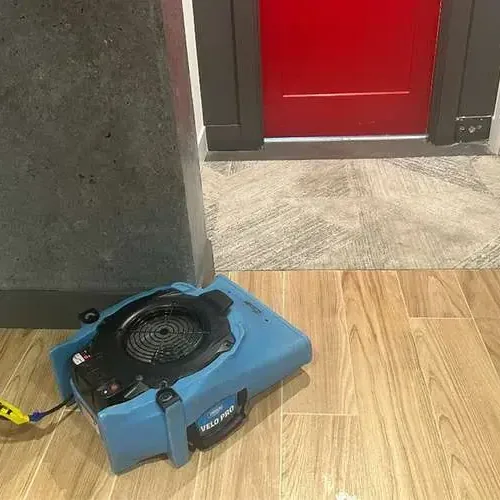
Drying the house and the garage
Once the standing water is gone, walls, framing and slabs still hold moisture. Meters mark the wet areas, and drying equipment runs until the numbers settle at the dry reference.
The storm flood cleanup in Fillmore is complete only when those readings are documented.
Drywall that soaked up water along the bottom of a wall is usually cut away, though framing and hard flooring often dry where they are when the readings allow.
- Trim is removed to let air into the wall.
- Toe kick panels under cabinets come off because water pools behind them.
- The garage slab is read once more before the equipment goes.
- Final readings are written down so the household has a record.
Keeping the next storm from becoming the same story
Creek country calls for preparation, not worry. A few habits make the first day of a storm much easier.
For help getting water out fast, the water extraction service and the main storm flood cleanup page describe the process, and the full list of local services shows the rest of the work.
- Know where the main water and power shutoffs are.
- Keep photos of the home as it normally looks.
- Store papers and electronics above floor level.
- Clear gutters and yard drains before the rain year begins on October 1.
Questions
Does the creek flood every winter?
No. Some winters bring only high water along the banks. The local record shows that heavy storms and early snowmelt have caused serious flooding in some years, so preparation still pays off and a quiet winter is not a reason to skip it.
Where can residents get sandbags?
Residents inside city limits can pick up sandbags at the fire station during flooding after calling first. The city says the program has limited resources, so planning ahead matters.
Why not stack sandbags against the house?
City guidance says wet bags add pressure on the foundation when they sit directly against the outer wall of a building. Keep them off the wall.
Is creek water safe to leave on the floor?
No. Creek water carries mud, debris and contamination, so it is extracted quickly and porous materials that soaked it are usually removed. Hard surfaces are cleaned and treated before drying finishes.
What gets dried and what gets removed?
Tile, framing and similar solid materials usually dry where they sit. Pad, wet drywall low on the walls and soaked paper items typically go to the dumpster.
Can orchard debris and mud clog drains?
Yes. Leaves, silt and debris wash into entries, gutters and yard drains, and clogged drains send water back toward the house. Clearing them is part of cleanup and of getting ready for the next storm.