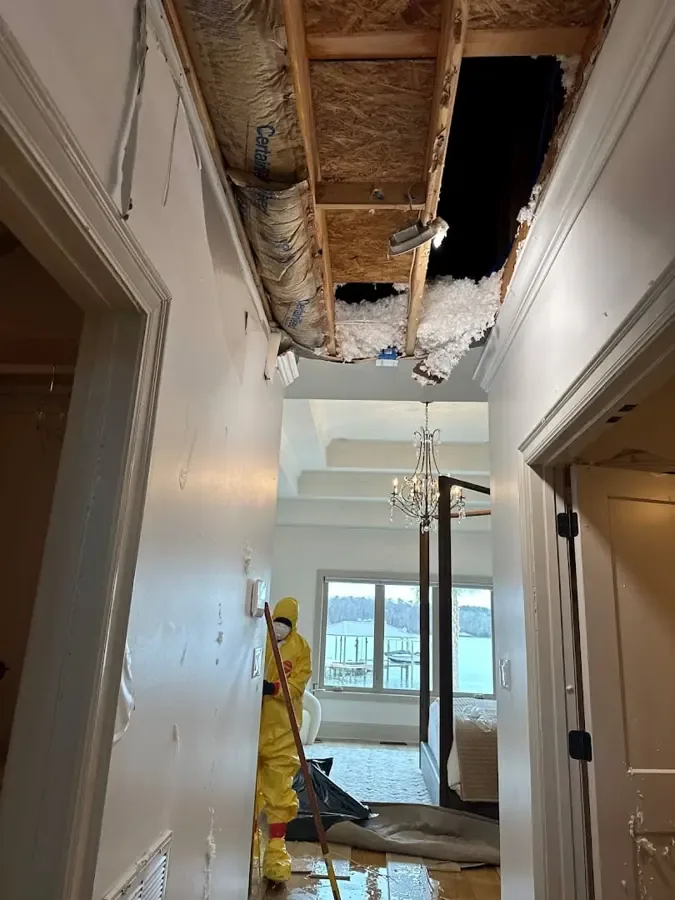
Camarillo has thousands of homes that share walls, floors or ceilings with a neighbor. When a leak starts in the unit above, the first sign is often a brown stain, a drip at a light fixture or a bubble in the paint overhead.
Key takeaways
- Census estimates count 3,762 attached single family homes and 5,677 homes in buildings of five or more units in Camarillo.
- The source above must be stopped before drying helps, so the neighbor and the property manager are told right away.
- Photograph the ceiling, walls and belongings before anything is moved or cut.
- Wet insulation and sagging drywall in a ceiling are opened so the water can drain and the bay can dry.
- Renters and owners alike benefit from dated notes and photos.
Why leaks cross units in Camarillo
The Census estimates count 3,762 attached single family homes, 450 homes in two unit buildings and 5,677 homes in buildings of five or more units. Plumbing in those buildings runs through shared walls and floors, so a failure in one home is rarely contained there.
The same estimates count 8,656 renter occupied homes among 26,025 occupied homes. Many residents therefore report to a landlord or property manager as well as to a neighbor.
Mixed housing is part of the city. Old Town Camarillo, Leisure Village and Village at the Park all sit in the same city, and their buildings differ, but a leak above a ceiling behaves the same way in each.
First steps when water comes through the ceiling
Water that drips is only part of what is above. The ceiling cavity can hold much more than what shows.
If a wet light fixture is on, leave it off and use a flashlight. Water in a fixture is a shock hazard, and the cavity above may be full.
- Move people, pets and belongings out from under the wet area.
- Keep the power off for a ceiling light, fan or outlet that is wet.
- Place a bucket under the drip and cover furniture with plastic.
- Tell the unit above and the property manager at once so the source can be shut off.
- Photograph the stain, the ceiling and any damaged belongings.
Protecting belongings below the leak
Furniture, electronics and paper goods under a wet ceiling are at risk even if they look dry. Water often runs down a wall and along the floor to a place nobody checks.
Moving things early costs little, and it keeps small damage from growing.
- Move electronics and paper goods to a dry room.
- Slide furniture away from the wet area and lift upholstered pieces onto blocks.
- Take rugs up so the floor beneath can be checked and dried.
- Keep wet clothing and bedding separate from dry items.
Common sources in the unit above
The source decides how far the water travels and how long it ran.
Appliances
A washer hose, a dishwasher connection or a refrigerator supply tube can run for hours before anyone notices, especially when nobody is home. These are handled under appliance leak water damage.
Pipes and drains
A supply pipe inside a wall, a tub overflow or a toilet connection can send water down through the floor and into the ceiling below.
- Water through a light fixture often points to a leak near that spot.
- A stain that grows after the neighbor stops using water can mean a hidden pipe.
- A damp spot in a closet wall often follows a pipe run behind it.
Heating and cooling equipment
An air handler or condensate drain above a ceiling can drip steadily when its drain clogs. The stain tends to stay in one place and keep growing.
Drying ceilings and shared walls
A wet ceiling hides water in insulation, framing and the cavity above it. Moisture meters and a thermal camera show how far the wet area reaches.
Drywall ceilings are tested from below with a moisture meter, and a clean cut section is easier to repair than a large sagging patch. Sagging drywall and wet insulation are cut out so the cavity can drain.
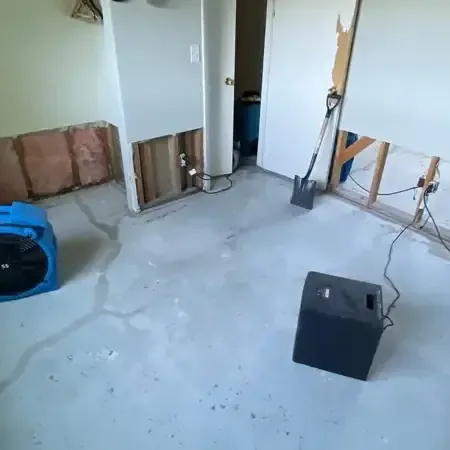
Then air movers and dehumidifiers dry the framing, and the ceiling leak water damage steps finish with readings.
- Wet insulation above the ceiling is removed instead of dried in place.
- A shared wall is checked from the bottom up for water that ran down inside it.
- Flooring below is checked for water that dripped through.
- The cut openings stay open until readings reach the dry reference.
Renters, owners and the property manager
Who handles repairs depends on the lease or the association rules, and those are worth a quick read. The drying itself should not wait for that conversation.
Clear records help in every case, and they are easy to keep. Owners in a condominium or townhome may also have an association to notify.
- Report the leak to the property manager in writing and keep a copy.
- Keep dated notes of every call and message.
- Photograph damaged belongings before they are thrown out.
- Keep receipts for hotel nights, replacement items and cleanup.
Preventing a repeat
Many leaks above a ceiling are preventable. Residents can ask the neighbor above, or the building manager, about a few basics.
A short check once a year costs far less than a ceiling repair. More about the work is on the ceiling leak page for Newbury Park, and the Camarillo water damage page lists every service.
- Replace old washer hoses before they split.
- Know where the shutoff valve is for each unit.
- Clear an air handler condensate drain before the cooling season.
- Never ignore a faint stain that returns after it dries.
- Run the washer and dishwasher only while someone is home for the first few weeks after a repair.
Questions
Can a ceiling stain be painted over?
Painting over a stain hides it without drying what is behind it. The ceiling and the cavity above need moisture readings first, and only dry material is sealed or painted. A stain that was painted over can also return and mark the new paint.
What if the ceiling is bulging with water?
A bulge means water is pooling in the drywall. Keep people away from underneath it, and a small hole at the lowest point can let it drain into a bucket, away from light fixtures.
Does the neighbor above have to open their floor?
Sometimes. Finding the source can mean opening a wall or floor in the unit above, and that is a plumber and property manager decision.
How long do the drying machines run?
Until the readings reach the dry reference. A ceiling bay that took a long leak usually needs more days than one that took a short drip, and the crew checks the readings each visit instead of guessing.
What should be saved for the property manager?
Photos, dated notes and receipts. They show what was wet, when it was reported and what the cleanup involved.
Is the neighbor above responsible for the damage?
That depends on the cause, the lease or association rules and what the property manager finds. The restoration work does not decide fault, and good notes and photos help whoever does.